
With over 700 million users in 2017, Instagram ranks among the top three most populated social networks, ahead of Google+, Pinterest and even Twitter.
The advent of smartphones and the creation of Instagram in 2010 revolutionized our relationship with photography, elevating it to the status of the most shared medium and democratizing its uses, making each of us potential budding photographers (we did say potential!).
Instagram has therefore quickly captivated millions of mobile users worldwide, attracting, through a snowball effect, the first advertisers seeing it as an opportunity to profit from user-generated content (UGC). Acquired in 2012 by the American giant Facebook, Instagram seems to be following in the footsteps of its big brother with a constantly evolving business model: from a simple mobile app to its arrival on desktop, including video integration and the introduction of monetization for brands, everything is designed to ensure complete complementarity between the two leaders in Social Media.
A picture is worth a thousand words.
With his quote "A picture is worth a thousand words", Confucius defined more than 2000 years in advance the reasons for the predicted success of this social network based entirely on images.
In 2017, Instagram photos generated an engagement rate 58 times higher than its older sibling, Facebook. This is something to make brands dream!
Moreover, 86% of them are now present on the platformAnd the network has everything to delight international advertisers who no longer have to worry about the language barrier: a simple image will evoke emotions in all four corners of the world.
What are the objectives for brands?
There are several reasons why a brand might open an Instagram account:
- – strengthen its presence in the minds of internet users and increase its notoriety,
- – to ensure complementarity with other social networks,
- – to identify influencers and/or brand ambassadors,
- – to generate traffic to a website through media buying,
- – to recruit and retain a community through exclusive content and competitions,
- – target a different community by developing a affinity communication,
- – capitalize on the UGC and control over content published by third parties,
- - Etc.
The only downside is that brands still have to be resourceful to compensate for the many constraints imposed on Instagram: non-clickable links in captions meaning a big loss in terms of generating traffic on an external site (which is however possible thanks to media buying), no native post sharing button meaning a loss of organic virality, etc.
Advertising as a tool for capturing and engaging audiences
In September 2017, Instagram announced it now had over 2 million monthly active advertisers. Brands have access to an increasing number of advertising formats: ads in Stories, viewed daily by 250 million users in 2017 (and in full screen!), the expanded shopping service, the booking service (hairdressers, restaurants, hotels, etc.), and the album format (up to 10 photos or videos per post). Instagram uses Facebook's advertising platform, offering advertisers new opportunities: advanced targeting, personalized content, and insights into the user journey. According to eMarketer, Instagram's advertising revenue is expected to reach approximately $6,8 billion in 2019.
Top 5 corporate brands that stand out on Instagram
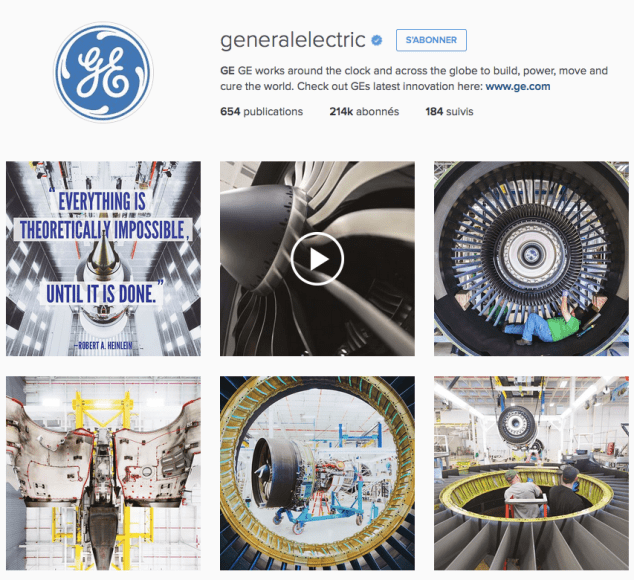
- General Electric makes us love the industry (and that was no small feat),
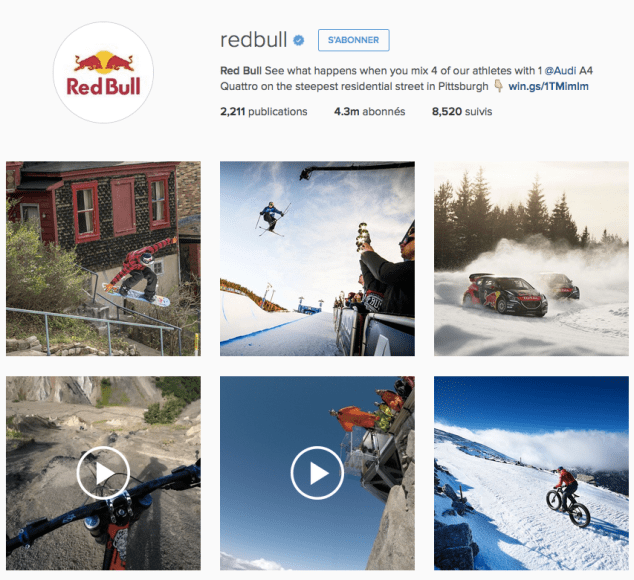
- Red Bull Keep giving us wings without even showing us a can.
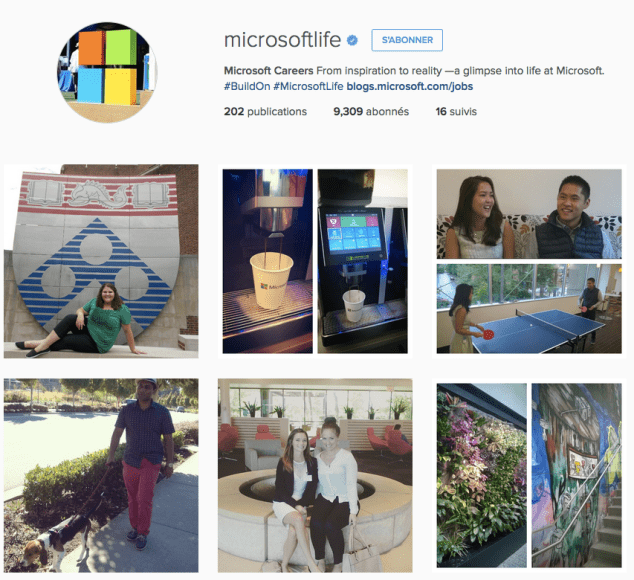
- ecosystem shows us the inside of the PC, from the employees' side.
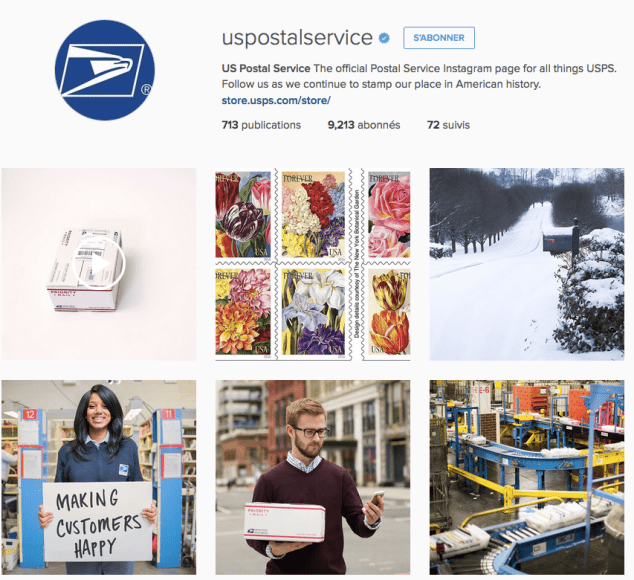
- US Postal Service They take us into US history (we're not crazy!),
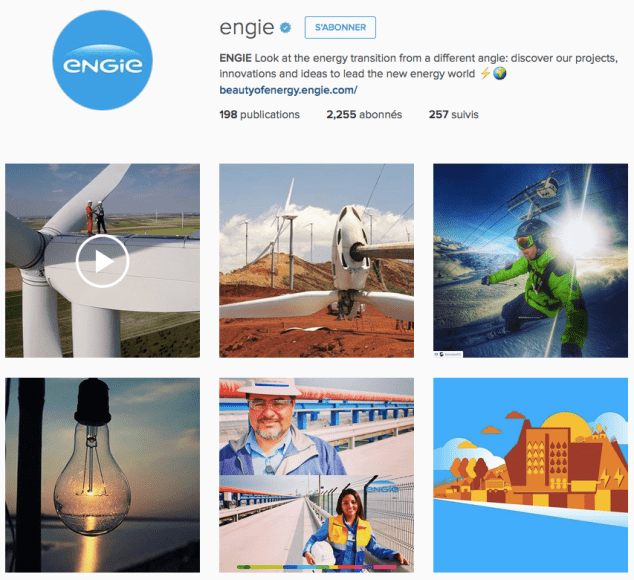
- Engie to combine aesthetics and energy.
A bonus: our top pick > For Valentine's Day, Adidas claims love for ALL (and everyone, don't be jealous friends).