
PMU, a century-old brand known to all, has undergone a revolution in the last six years. Advertising, sponsorship… In meeting with the We Are COM team, Benoît Cornu shared the successful strategy of the horse brand and his convictions as a communicator. !
Editor's note: Benoit Cornu left his position as Director of Communications at PMU in December 2017.
Hello Benoît. Let's get down to business! What does corporate communication mean to you?
In school, we learn that communication is about effective relationships with relevant audiences. This simple and effective definition, which can be broken down by objectives (commercial, corporate, HR, etc.), has always stayed with me. From this perspective, communication becomes a lever serving the company's strategy. Communicating for the sake of communicating is pointless. I don't know of any bad strategy that can be salvaged by good communication. On the other hand, I believe that no good strategy can reach its full potential if it isn't accompanied by relevant and proactive communication.
Corporate communication is essentially the synthesis of all communication activities and thus becomes a strategic lever. It is implemented using a number of tools, skills, and methods. It is organized over time, according to the target audiences and objectives.
So communication is a strategic support function?
In a world where information is central and real time is becoming the norm, I am convinced that communication must be linked to the highest level of decision-making in the company. All debates about how communication is organized within companies are legitimate. They demonstrate the adaptability of communication departments to the diversity of organizations. We also sometimes still observe a lack of influence within organizational charts. My conviction is that the Director of Communications must have a direct line of communication with the CEO. The Director of Communications is the guarantor of the brand's integrity and the company's identity. There is a form of "professional intimacy": a relationship of absolute and total trust between the CEO and the Director of Communications. This doesn't mean the Director of Communications is a confidant, but they have this somewhat unique role, which ranges from supporting decision-making to ensuring good governance. They are an interface between internal and external stakeholders and the CEO; they must know how to, and be able to, communicate directly.
Is that the case at PMU?
Since 2009, yes. We made communication a driving force for change and the company's transformation. It was a thrilling experience as a communicator. We opted for a strategy of omnipresence in the media landscape coupled with a constant element of surprise: every month, we announced new developments and innovations designed both to surprise and to illustrate the company's actions. In this way, we rose above the noise with evidence-based communication that engaged internal teams, stakeholders, clients, the media, and more. We said what we were going to do and we did what we saidA strategy that always pays off.
Have you “made the brand less outdated”?
PMU is one of the finest French brands: it is heritage and popularIt belongs to the French collective imagination. It is a street brand, part of everyday life with 13,000 stores, which must also follow the evolutions of society.
In 2010, we faced the opening of the market to competition. We looked at what had happened in the directory assistance market, where the traditional brand (the “12” which became “118 712”) had been hit hard by the “toutouyoutou” wave of “118 218.” We positioned ourselves as a challenger and understood that the battle would be fought on the communication front. We took this logic to its logical conclusion and decided to take a “step aside”: to create a break in attention by changing the tone. In communication, this translated into humor and self-deprecation. We “Uberized” our market.
In this age of information overload, have you maintained your "omnipresence" strategy?
Today, the focus is less on volume and more on timing. The question isn't whether to communicate (thankfully, that's no longer up for debate!), but on what, how, and especially when. We must both capitalize on external events and create our own schedule. We must constantly observe our environment and the results of our actions, and when possible, measure them. Today, a company is subject to far more external demands: it is required to operate within a much broader scope than its product and product offerings.
Does the company have to manage morality today?
I prefer to talk about ethics, not morality. Ethics is a principle of operation. In our sector, the problem of gambling addiction is marginal in terms of volume (less than 3% of gamblers), but it is a central issue that must be treated as such. The question is not whether gambling is "good" or "bad": that is a matter of individual behavior that the company cannot control. However, it is the company's responsibility to provide consumers with the means and tools to understand the potential risks and protect themselves from them.
Is it also his responsibility to invest in new sectors, such as culture? The Team was impressed by your patronage of photography.
In our corporate sponsorship, too, we wanted a disruptive strategy. In 2008, PMU's sponsorship focused on restoring the equestrian statues at the Louvre and the equestrian academy at Versailles—it was heritage-oriented, looking towards the past. However, our corporate strategy was geared towards digital transformation and openness to competition. So we considered a more contemporary approach to sponsorship. At a time when photography was becoming more accessible thanks to smartphones, and thanks to some wonderful encounters—notably with Raymond Depardon and Diane Dufour—we took a chance on photography. Our first initiative was to create a shift in how PMU was perceived by giving an artist free rein to photograph our brand. Work that we continue today.
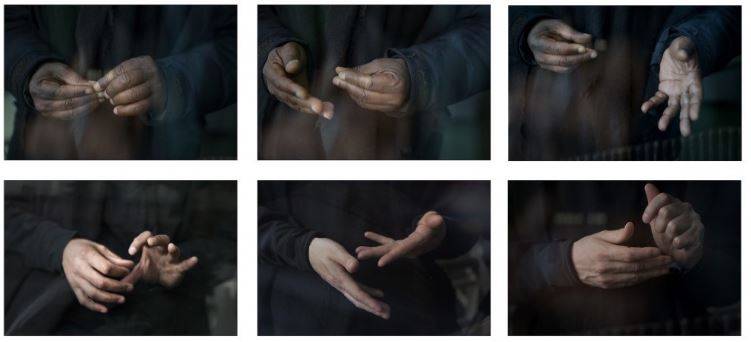
In 2016, the Carte Blanche PMU Jury selected the work of photographer Anna Malagrida
And in 2015, PMU became a partner of the Centre Pompidou's photography gallery. A real "surprise" move, once again. The role of a patron is to act as a bridge between art and the brand's traditional audience, who don't necessarily frequent museums, and to create connections, to build bridges between these different audiences. It's certainly a recreational space for the brand, but it's always part of the corporate strategy. The same goes for sponsorship: we chose to sponsor the French national team and PSG because football is the number one sport for betting, and these two teams bring us brand image and visibility. It's consistent with our target audience.
A true global communication strategy! Is that the secret to becoming a Communications Director?
There's no secret to becoming a Communications Director; it takes time and energy. It's a profession where expertise comes from experience. There are no communication engineers, despite the real complexity of the job. You learn on the job. You have to be very curious about everything, attentive, a real "sponge," understand the world you're in, adapt, and be persuasive. Paradoxically, you can't have too much ego. You must first and foremost know how to promote your brand, your boss, and be at the service of your company. And you have to be bold, to take risks. It's not about courage, but about conviction. And for all communications professionals, you have to know how to write! For me, being a skilled writer remains a fundamental quality in our profession.
3 things to know about Benoît Cornu
He appreciates Pivot's tweets. His tweets are a delight because they're simply a pleasure to use language; he tells a story in 140 characters. »
He's not allowed to play the races 🙁! Like the croupier at the casino, he can't bet himself.
As a committed communicator, he is a board member of Entreprises & Médias and the ARPP (Professional Advertising Regulatory Authority).