
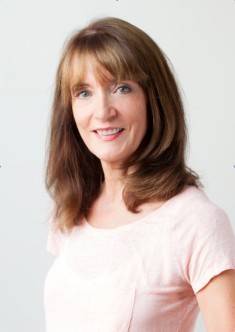
Franco-American Nicole Bacharan is a political scientist specializing in the United States. The We Are COM team rushed to her to understand the shockwaves caused by the election of Donald Trump. From Paul Lazarsfeld In 1940, every US presidential election became a textbook case for communications professionals. So the questions arose: How did he manage it? What are the new paradigms of political communication? What were the tricks, the old recipes, or the real innovations? Without exaggerating (sorry), the answers will surprise you.
 Hello Nicole and thank you for answering the team's questions, a bit shaken after this political earthquake. We feel like we've been watching a bad reality TV program: episodes full of twists and turns – revelations, investigations – Hollywood characters – the beauty and the brute, the hyperactive one and the exhausted one – role-playing games that reverse – the conservative becomes the iconoclast, the billionaire becomes Robin Hood, etc.
Did American voters "buy" their candidate in a compulsive way? last minute ?
It's clear that the last minute played a role. With early voting, which is also reflected in exit polls, we had a feeling the election was going to be close. You could say the pollsters weren't wrong up to that point… In the end, Hillary Clinton came out on top with a 1,5 million vote lead, but the votes on the very last day flipped several states. Donald Trump became the 45th president of the United States. We could have ended up on WeAreCOM.fr to talk about the first female President of the United States!
While the last week was indeed crucial in this election, I don't know if the Trump vote was "compulsive." "Passionate," yes. It was a vote of passion, far removed from any reason.
What was Donald Trump's strategy and how did he awaken the "passion"?
For all the astute strategists analyzing the country's demographic shifts, it was impossible to elect a president without the Latino vote. Yet Donald Trump ignored—even stigmatized—the Latino community to focus on the blank ballot. His goal was to mobilize white abstainers by spouting outrageous and fabricated falsehoods. Facts didn't matter. Outright lies didn't matter. It all worked. Each time, Trump recovered and moved on to the next tactic.
This presidential election fully reflects a period of " post-truth »
Despite the " Fact-checkers Donald Trump thus managed to convince people by delivering messages that were often contradictory or false. In communication, is truth ultimately that of emotions?
This presidential election fully reflects a period of "post-truth "Post-truth." We are witnessing the spread of falsehoods on social media, relayed by opinion leaders and leaving traces that no correction can erase. This is the darkest aspect of the internet, one we were already familiar with. The most astonishing thing, however, lies elsewhere: studies on Donald Trump's electorate have shown that even his own supporters did not believe in his promises, such as building a wall between the US and Mexico. Unrealistic. These voters did not choose a program, but a personality delivering a message of anger.
With the election of Barack Obama, the first African-American President of the United States, voters also chose a personality. 2008 = 2016?
Hillary Clinton's electorate voted for her competence and experience. A sensible choice that didn't translate into support (let alone passion!). Previously, Barack Obama had managed to generate incredible momentum around his personality, which won over the public with his claim « Yes, we can "A positive and collective message: more hope, more generosity, more morality, more tolerance... His campaign lifted people up.
This year, nothing new except the same scenario pushed to the extreme: always a charismatic man becoming the mouthpiece of a powerful movement of opinion, capable of taking crowds even further than they imagined. But with " Make America Great Again "The direction has changed. Trump's message has awakened the anger of Americans against a backdrop of nostalgia, individualism, fear, withdrawal, rejection... He has taken anger down the path of revolt.
But... why didn't anything stop him?
« How can we stop it? How can we stop it? "Why?" That's THE question that Democrats AND Republicans kept repeating throughout the campaign. In my opinion, the frenzy is the result of a combination of techniques and channels: the application of reality TV methods, the use of social media (which costs nothing!), and media saturation. It gives us... trash without limits, with "fake news," increasingly wild rumors, and the classic conspiracy theories of which Trump himself has become the mouthpiece. I read this… I was told that… He mixed genres, broke the rules, and poured it all onto the web.
In the final stretch, Trump's maneuvers were complicated by the FBI affair concerning Hillary Clinton's emails: the announcement of an investigation ten days before the election, then its closure two days before. The blogosphere erupted with the usual " all rotten "," all corrupt "," all protected This event most certainly influenced the election, the vote or abstention, beyond the Trump phenomenon which was already of a very large scale.
We had a great one man show Across the country.
Roosevelt used radio to reach the heartland of America, Kennedy used television to build his legend of black and white family images, Obama reinvented door-to-door campaigning. Has Donald Trump become a master of the Web?
It's mainly Twitter, managed very personally. He speaks directly to the people, lacking a real organization on the ground with activists. An insomniac, he tweets at 4 a.m. when no one is around to ask him... Are you sure? "In the final stretch, his team had even taken away his Twitter account to avoid any further uncontrolled outbursts.
You're right about door-to-door canvassing. In 2008, Barack Obama masterfully used data, particularly from social media, to identify voters, understand their motivations, and organize field operations: activists went knocking on the right doors. The coolest thing in the world at the time was going door-to-door and discussing the world with a stranger. But unlike Trump, Obama didn't have direct interaction with the people.
While Hillary Clinton did indeed replicate Obama's approach, it was no match for Donald Trump's transgressions. She responded to his excesses with rational messages. She failed to innovate in her communication strategy. She didn't manage to skillfully leverage social media to increase her presence in states considered vulnerable for Democrats.
Beyond Twitter, Donald Trump has held numerous rallies…
We had a great one man show Across the country, Trump relied on his personality and showmanship. He would arrive in a city, take the stage, then hop on a plane to replicate the same strategy in another city. Pure Donald Trump from start to finish. On stage, just him: no singers, no artists, no celebrities. In front of him, all the local media and his grassroots supporters were invited to share their champion's soundbites on social media… including Twitter!
3 key figures from the campaign
> 225,8 million of registered voters in the United States and a turnout rate of 54,2%, the lowest of the last 3 presidential elections.
> + 100% This is the Clinton vs. Trump campaign budget. Hillary Clinton spent $500 million, with 53% on media buying and only 3,5% on online investment, compared to "only" $250 million for Trump, with 27,4% on media buying and 23,6% invested online. For the first time, a US presidential campaign cost less than the previous one.
> 17 million of tweets published during the 2nd Trump/Clinton debate, on October 9, 2016. A Twitter record.
3 things to know about Nicole Bacharan
She is a National Fellow at the Hoover Institution at Stanford University in California.
On September 11, 2001, live in the studio of the 20 p.m. news on France 2 presented by David Pujadas, she made a strong impression on French viewers by declaring: Tonight, we are all Americans ».
His latest book, co-written with Dominique Simonnet, focuses on particular figures in American politics: the first ladies.