
From the formal headshot of the "boss" to the snapshot of "people," images have become ubiquitous in our lives. Yet, faced with this deluge of pixels, we are often searching for THE photo. The one that speaks to us, the one that offers interpretation. But how do we find it? How do we use it? Feeling a bit lost, the team called on the help of an author-photographer, Hermance Triay, a true expert in the field. goldsmith of the portraitA meeting without clichés.
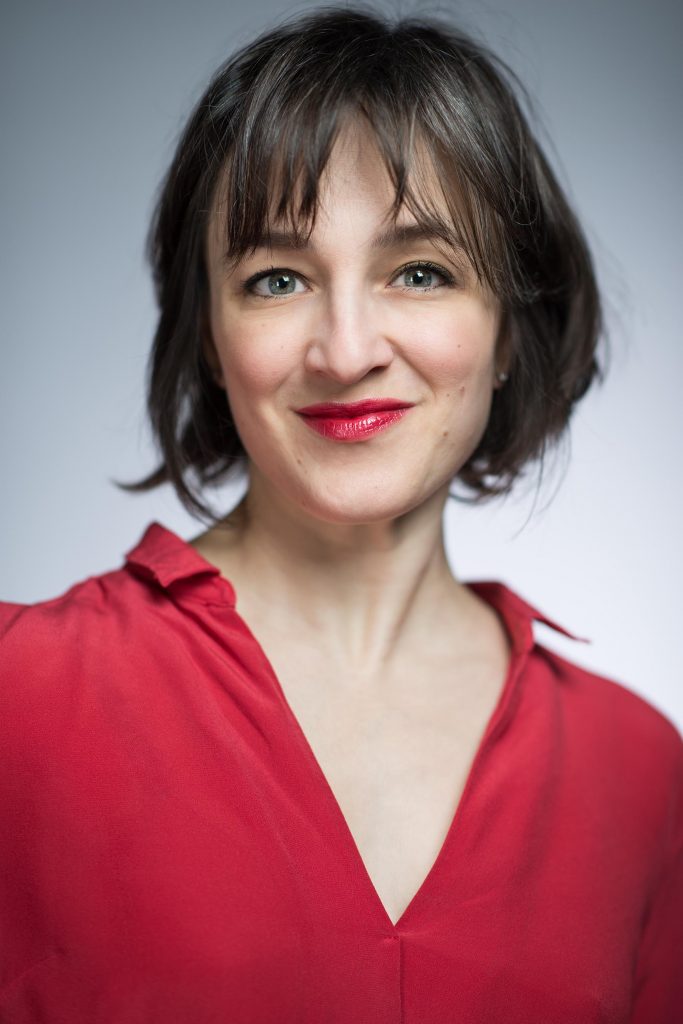 Hello Hermance! Our first question is for ourselves… How do you convince your CEO to (finally) change photographers?
Keep your photographer if they're the right one! Choosing your photographer is first and foremost about making a connection. They need to be perceptive enough to understand your needs, creative enough to translate your words into images and keep them fresh, and firm enough to set the right pace for the photoshoot.
Before having a good eye, a photographer must have a good ear. Meet with them and make sure they understand the challenges of portraiture and the conventions of your profession. I remember this CEO who told me, I want to show the signs of youthful energy "and that at the same time, the experience should be felt. She needed a portrait that subtly demonstrated all of that."
In practical terms, how do you brief a photographer?
Your specifications should include three points: the desired number of images, the budget, and the clear and, above all, unique message that the photographs must convey. The pitfall is to limit yourself to describing what you don't want. My advice: if formulating the message isn't obvious, do some research to find examples that will serve as a basis for discussion and collaboration. briefA picture is often worth a thousand words.
And then, inspire him! Share your challenges, your artistic aspirations, with him. Photographers are just like you; they enjoy investing themselves in rewarding work and want meaningful projects.
On the big day, how can you be truly useful without turning into a wallflower?
As Head of Communications, your role is essential. Before a portrait session, for example, it involves preparing a clear room to accommodate my mobile studio, organizing a strict schedule, and above all, liaising with the colleagues who will be photographed. Everyone must be dressed to the nines; it's imperative that someone relays the photographer's message to the team. I've even asked female colleagues to bring their clothes on hangers the day before. Thanks to my internal contact, they arrived looking dressed and coordinated.
On the day of the shoot, flexibility is key to facilitating the photographer's work, especially with scheduling adjustments due to unforeseen circumstances. Finally, you'll likely be acting as a "lighting double," just like in the movies.
And ultimately, what is a "good photo"?
If the eye is caught, it's because the image is compelling. And holding attention for more than a second—that's the whole ambition of a photograph!
In business, a successful image conveys a single, clear message! Your portrait should present a competent, confident personality, someone people will enjoy working with. A good portrait reflects the best you have to offer, and this is possible when you enjoyed being photographed.
By the way, how do copyrights work?
The photographer has the status of author, and copyright law applies. The company pays the photographer for the day of shooting, and then for the rights to use each image. The scope of the image exploitation rights is determined by the intended use: which media will be used, in which countries, and for how long. It's important to understand that you are buying a right for a specific use, and that a photograph is an inalienable work that remains the intellectual property of the photographer. In other words, the photographer must always be credited as the author, particularly in the website's legal notices.
Is portraiture an imposed and immutable exercise? Is the selfie the pinnacle or the vulgarity of portraiture?
We must distinguish between Art, its history of portraiture and self-portraiture, and the selfie. The history of Art is also the history of the technical and technological innovations that enable the production of works. In portraiture, the medium of choice was long painting. Initially, photography was a niche activity, used primarily by artists—a somewhat vulgar pursuit. It became more accessible, portraits became more vibrant, more "natural" because the increasingly rapid capture of images allowed for capturing movement. Both a prescribed and immutable exercise, the portrait results from technological advancements and follows trends; it is often integrated into an artistic approach.
The rise of the selfie is a result of the democratization of the smartphone with a camera and immediate access to social networks. This technology allows users to document the extraordinary aspects of their lives for their community by posting pictures of themselves watching themselves being photographed. The hope is for approving feedback. The selfie has its own set of rules, so much so that public figures adopt it and mimic an existence where " They are not like us, but they do what we do. "The smartphone even acts as a minilab by offering image enhancement modes according to current photographic aesthetic trends, but a priori there is no artistic approach in the selfie.
The relationship to the classic portrait is different because the person confides in the photographer during a session; the result is a collaborative work whose purpose is not simply to exist immediately, primarily through the gaze of the other. The portrait is a moment… that endures, to be passed down as a legacy!
Between us… tell us: why are we so afraid in front of the camera?
Aren't you afraid of having your soul stolen by the lens? A portrait session confronts the image you have of yourself with the image you want to project, the image you fear projecting, and the image the photographer will capture. The more closely your self-image and the image you want to project align, the better the session will go. Choose a photographer who has the talent to establish a simple exchange that puts the person at ease, in the best frame of mind to allow the personality you want to reveal to emerge.
How do you make the person being photographed feel comfortable?
Trust is key; it gives everyone more freedom as the session progresses. I like to know what the person expects from their photograph. Then, it's my ability to guide them, to help them become comfortable in front of the camera, that relieves their stress and allows for an authentic and relevant portrait that reflects their personality. I remember a senior executive, used to tedious photo sessions, telling me: With you it was simple and painless, I feel great! »
Finally, what are the mistakes to absolutely avoid in corporate photography?
For a photograph to truly shine… it requires careful preparation and fully embracing the moment of the shoot! The most common mistakes include: not informing the people involved, creating too many hierarchical distinctions which risks making some feel insignificant, ordering wide-angle portraits and assuming that cropping them to a close-up is an economical solution of equivalent quality, trying too hard in front of the camera, forgetting to breathe, stifling intuition to better apply old techniques that produce boring photos, trying out a new hairdresser the day before the shoot, etc. Approach the shoot like a game, be confident: get comfortable You are in the right place!
3 things to know about Hermance Triay
- She takes her holiday photos with her smartphone (shh!)
- She honed her skills at Studio Harcourt after graduating from EnsAD Paris (École nationale supérieure des Arts Décoratifs de Paris).
- She has lost count of the personalities captured by her lens who are to discover here.