The Tour de France is the event of the millions: 10 million people on the roads, 12 million television viewers, 14 million pieces of merchandise distributed. Wow! After VittelThe team was able to meet another major partner of the Tour de France: the brand SenseoInterview with Céline Borrat-Michaud, group leader at Jacobs Douwe Egberts.
Hello Céline, and welcome to We Are COM! To start, our usual question: what is your definition of corporate communication?
Corporate communication is communication that is based on the values that a company wishes to convey, and not solely on its products.
Senseo has been the official coffee of the Tour de France since 2014. Why did you choose Senseo for your brand portfolio?
Senseo is a brand that shares many values with the Tour de France. It's a very popular event, reaching a large number of people, centered around values like simplicity and conviviality, which Senseo shares: simple, accessible, family-friendly coffee. Let's not forget that Senseo is the brand that popularized portioned coffee in France. Founded 17 years ago, it's now consumed in 31% of households. It's this popularity that made Senseo a partner of the Tour.
What does the event contribute to the brand strategy?
There are several positive aspects to the partnership between the Tour and the Senseo brand. A huge number of people watch the Tour, and not just those who are interested in cycling.
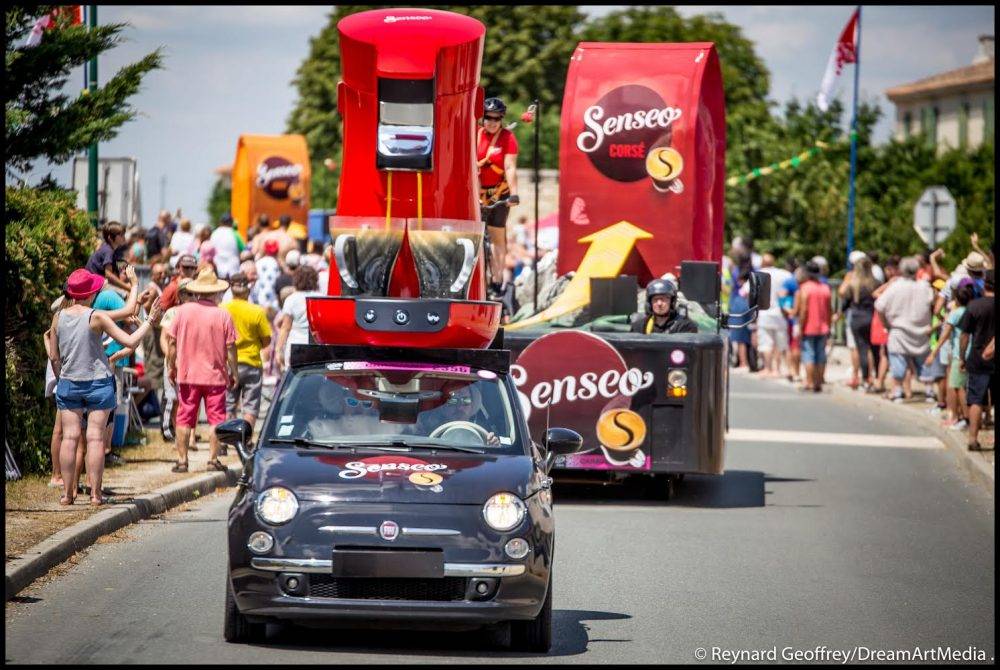
Firstly, there's the fact that it's a sporting event. This reinforces the notions of dynamism and modernity already present in the brand, which we aim to leverage. But beyond cycling, it's primarily the scale of the event that serves the brand strategy: we estimate that ten million people are along the roads watching the caravans; in addition, there are twelve million television viewers and sixteen million people visiting the event venues. This provides exceptional visibility for the brand.
Here, the values of sport are passed on, and much more. Participating in the Tour de France means sharing a moment in life and living an experience: you admire the scenery, you enjoy the festive atmosphere. And these are the things we want to connect with the brand.
How to make your brand stand out in an event like the Tour de France?
Today, there are around thirty sponsors of the Tour, but everything is done in close cooperation with ASO [Editor's note: Amaury Sport Organisation, organizer of the Tour de France], which manages the exclusive deals very well. Currently, Senseo is the only coffee sponsor. Obviously, this makes things easier in terms of competition.
That's why we wanted to rework our brand identity and create a real slogan specifically for this occasion. This allows us to bring the Tour de France into our conversations, rather than just plastering our logo everywhere. Having this specific identity allows us to truly enter the world of the Tour and become part of it, which promotes long-term brand recall.
Next, it is essential to activate all points of contact with audiences who will either consume at Senseo or watch the Tour de France.
We therefore have a communication plan that will be structured around media, television, digital, point of sale (massive POS in 1000 points of sale) and everything we will do on the roads (presence in the Village, tricycle, bike café and the Tour caravan).
How does Senseo differentiate itself from its many competitors on the market?
The coffee market is very rich and includes many strong brands that have a deep emotional connection with consumers, but each has its own unique positioning. There's something for every taste and preference!
The positioning of the trademark Senseo is built on the concept of accessibility at every level. It's an accessible coffee in terms of price, taste, and also mindset: it's a brand that conveys simplicity, both in its positioning and its communication. Our commercials are filmed in apartments. We aim to create a world similar to what people have at home, to become part of their everyday lives.
How are communication professions evolving in the mass distribution and retail sector?
The retail sector is clearly experiencing a real turning point with digital technology. While it was already a key element, it is now becoming indispensable.
Some consumers are going to stores less and less. We need to be able to reach them nonetheless, without being physically present. We can no longer rely on "traditional" communication, where an advertisement could run for several years on television. Content creation takes much more space and time than in the past. The formats are different: shorter, more personalized, more targeted.
The most important thing is to keep a fresh perspective and open ears. To be able to listen to everything that's happening. Communication, to be effective, must be very aware of what's happening right now: not tomorrow, not yesterday.
It also means asking ourselves questions about what we are doing. Looking at what is being done in terms of communication methods, listening to what is happening, to see if what we are doing is appropriate.
Openness is the most important thing. And the challenge of the profession is to maintain this mindset throughout one's professional life.