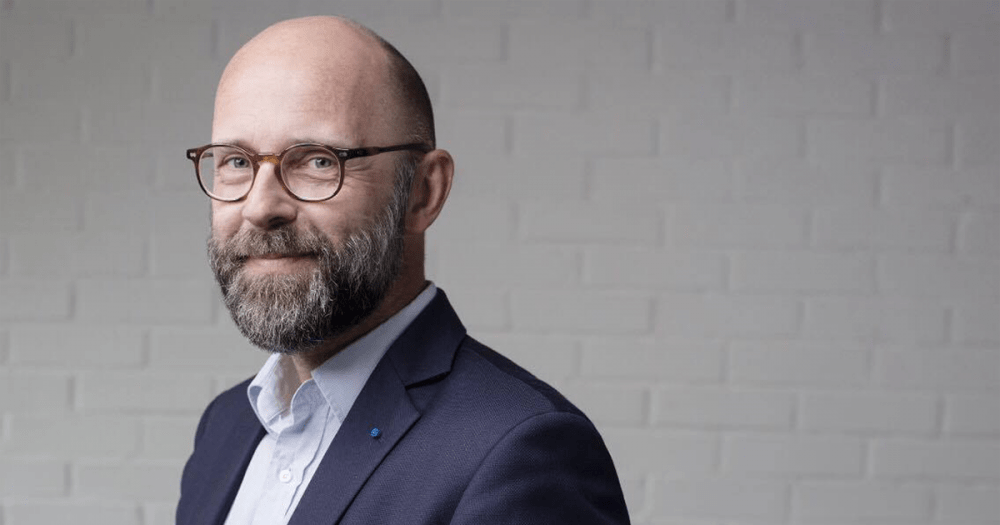
This is the great paradox of communications professionals, like shoemakers: promoting a company is what we do best. But when it comes to talking about ourselves, it's a different story! While we're called upon to coach our leaders or develop employee ambassadorships on social media, we have a duty to set an example. A look back at a personal branding session for members of the Club We Are COM with Frédéric Fougerat himself!
Personal branding, quesaco?
Personal branding is an effective way to establish yourself in a professional environment and connect with your community. But there's no secret to engaging others. A good personal communication strategy is, above all, a editorial slant readable and relevant content as explained to us Frederic Fougerat, Director of Communications, Marketing, Customer Experience and CSR for the Foncia Group. This manager at the heart of the companyThe title of one of his latest books, *The Voice of the People*, also refers to him as one of the most connected communications directors in France, with over 22,000 followers on Twitter. The key to his success? No personal stance. Only the convictions of a communications professional. In short, an expert's vision above all!
Hello Frédéric, is personal branding essential to our careers?
Frédéric Fougerat: I'm not sure personal branding is essential, but it's a huge advantage right from the recruitment stage. A recruiter can easily find information about you by typing your name into a search engine. Whether they go to LinkedIn, Google, or any other social network, it will have a positive or negative impact on how they perceive you. In short, it is better to have no personal branding than to have bad personal branding. And this applies at all hierarchical levels, since from interns to company CEOs, everyone can leverage their influence and personal networks to promote their brand. Therefore, everyone can either harm or positively impact the company and its reputation.
How to build a relevant editorial line?
FF: First, you have to know why you're doing things! If I know why, then I will be able to decide on my editorial line:
- Why do I choose one social network over another?
- What do I decide to do there?
- How do I want to be identified?
- What do I have to share?
In my case, I've been sharing topics on communication for a very long time. I originally created dircomleblogThen I switched to Twitter to continue sharing my vision as a communicator. I chose Twitter because I'm primarily an observer, and it allows me to access information and connect with people I wouldn't otherwise be able to follow. At the same time, I'm also a contributor: from the information I gather to my passion for my work, I enjoy sharing my perspective.
Should we mix our professional and personal lives?
FF: Imagine a veterinarian talking about their work and showing the animals they live with; that would be coherent and effective. It's not applicable to all professions or roles. For example, it's not easy to share personal opinions as a communicator, even if you want to. But having an editorial line doesn't mean having a single topic. For example, my editorial line covers communication, management, and... CSRIt is open while remaining focused on my areas of activity and professional expertise.
How to engage your community?
FF: Before engaging, you have to start by nurturing your community. Personally, I send a personal message to each new follower. Then, I make a point of replying to 100% of the private messages I receive. As for engagement, I've learned empirically what works. For example, if I post my own photo as an illustration for a tweet, I get ten times more engagement. Generally speaking, you should illustrate your tweets with a visual, a video, etc. Finally, I've noticed that there are two times that work very well with my community: Tuesday morning and Thursday morning.
Should the content be spontaneous or planned?
FF: To be honest, I have very little spontaneous content. because I am never reactive and rarely involved in breaking news. I get ideas all day long, and as topics come to me, I write tweets, save them as drafts, and distribute them throughout the day or week. I choose to address topics that are more or less lighthearted depending on whether they are to be published during the week or on the weekend.
Do you have any advice for those who want to get started?
FF: I would quote the advice given by Jonathan Chan in a mini-series of influencer interviews that I just released: Go for it! The main pitfall is trying to perfect your Twitter strategy. These platforms are constantly evolving in terms of usage, so it's wiser to be less demanding with your strategy and adapt as you go. In other words, it is also by testing things that one defines one's editorial strategy.
Regarding the pitfalls to avoid, I think thatYou shouldn't try to cover every topic at once, or you risk being overwhelmed.Then, some people might be toxic or offensive; you should ignore or block them. You're not obligated to maintain contact with social media users who disrespect you. The trap is trying to engage in a dialogue with them. Remember that we're publicly exposed and can be attacked as individuals, sometimes even unfairly by hysterical people who don't know you.
Is being a communicator about taking care of other people's personal branding?
FF: Personally, that's what I've done a lot of throughout my career, especially in terms of...employee advocacyWhen I was head of communications for the Altran group, we were addressing a highly connected population that wasn't very interested in social media. So I launched the global internal campaign « Master your reputation » in 26 countries to share communication tools and raise awareness of risks. At Elior Group, the employee populations were very diverse. We therefore created the internal program (which is still ongoing). « We are socializers » to offer social media training at different levels (from novice to experienced).
As for leaders, there are two categories: those who love the limelight and those who prefer to live in the shadows. For the latter, it is sometimes essential to be in the public eye and to embody the company!
What are the best examples to follow?
FF: There are many, but to name just a few:
- Beatrice Mandine, director of communications for the Orange group
- Dominique Kalif Director of Communications for the CIE network in Ivory Coast
- Marie-Christine Lanne, Director of External Communications and Societal Engagement at Generali France
- Toba Tanama Director of Communications for the Presidency of the Togolese Republic
The replay and presentation materials