
« We are not born a brand, we become it gradually, we can also stop being “,” declared the renowned French communication and marketing expert, Jean-Noël Kapferer. ☝️ And indeed, as a brand, what is the solution to ensure its continued existence? How can a company's DNA be kept alive over time? How can its roots and history be showcased to serve its heritage identity? 💡 To shed light on all these questions, and because it is by valuing the past that the future can be glimpsed, the Club We Are COM invited experts in brand heritage. Sandrine Tirante, Head of Brand, Communication and Advertising at LCL, Kristine Drullion, Head of International Corporate Communications for the LVMH Group et Michael Murphy, Head of corporate heritage and international communications at Airbus, give you the recipe for a brand legacy that endures.
You’ll find here:
Expert opinion


The legacy of LCL's heritage
Hello Sandrine, and thank you for welcoming us to this cathedral-like place, the 19LCL. Can you tell us more about this heritage site?
Sandrine Tirante: Indeed, this building is quite emblematic of LCL's history. Historically, Crédit Lyonnais, founded by Henri Germain in 1863, was intended to be an exclusively Lyon-based bank. However, little by little, this banking institution expanded throughout France. In 1876, Henri Germain decided to open a Parisian branch to serve as the central hub of Crédit Lyonnais. This new location had the advantage of facilitating communication between the bank and the various decision-making bodies located in Paris.
At the time, in place of the current 19LCL, stood the Hôtel de Boufflers-Rouvenel, whose gardens extended from the boulevard des Italiens to the rue du Quatre-Septembre. This structure was fundamentally altered by the construction undertaken by Henri Germain and the architect William Bouwens van der Boijen. As an interesting side note, a magnificent garden of over 700m2 once graced the roof of this newly renovated building.
It was in 1878 that Léon Gambetta inaugurated the Hôtel des Italiens, which would give its name to the boulevard. During that same year, Crédit Lyonnais opens 23 local branches, thus becoming the leading French bank. This rise did not stop there, since in 1900 Crédit Lyonnais became the world's leading bank, and remained so until 1914 and the outbreak of the First World War.
Let's jump ahead in time. Between 1982 and 1993, the bank, which was still headquartered in the Hôtel des Italiens, underwent successive nationalizations. Unfortunately, this arrangement was short-lived, as a fire destroyed the historic building in 1996, forcing the main branch to relocate to Boulevard des Capucines. Following this disaster, the group had to sell off the entire rear section of the building and undertake a major restoration, carried out according to historical architectural principles.
In 2005, Crédit Lyonnais became LCL Le Crédit Lyonnais, in an effort to modernize the bank's name and image, as the brand had been tarnished by a few scandals. LCL is now our commercial name, however, Crédit Lyonnais remains our legal name. So, if you see this at the bottom of your contracts, rest assured, it's not a mistake. 😀
This new brand will evolve into "LCL Bank and Insurance" in 2012. Changes can take time, today our new name has entered the circle of banking brands spontaneously mentioned by the French.
Starting in 2008, LCL's headquarters moved to Villejuif, into brand-new premises built specifically for this purpose. It was important to consolidate the bank's various departments in a single location, making it more customer-focused than ever. The main branch was then relocated to the Hôtel des Italiens, which became known as 19LCL.
In 2011, major renovation work was undertaken. For this large-scale project, the building was covered with a trompe-l'œil tarpaulin intended to mask the facade renovation through art. We wanted to create a striking contrast with the surrounding Haussmannian buildings. It was a rather interesting way to stand out in this very stately urban landscape. This buzz has helped to rejuvenate LCL's brand image, giving it more approachability and dynamism.
This buzz helped to rejuvenate LCL's brand image, giving it a more approachable and dynamic feel.
And today, how does 19LCL contribute to the brand's heritage influence?
ST : Today, The 19LCL is a majestic heritage monument, which everyone can enjoy. Everything has been designed to be attractive and vibrant. This space is open to the public. Feel free to come in and discover this listed monument.
More specifically, the 19LCL is structured around 5 main areas, which are:
- Our Agency, a shared workspace and client reception area.
- The large gallery, a space open to the public which features extraordinary architecture.
- Academy, consisting of seminar rooms and auditoriums open for hire.
- The foruma unique place for work or rest open to all.
- The Club, a privileged space available to LCL's "best" customers.
Regarding event rentals, 19LCL offers more than 1000m2 of available space spread across 6 modular areas and with a capacity to accommodate up to 500 people. Numerous seminars and parties are organised each year within this central agency, whose façade can be lit up according to the requests and tastes of each person. Recently, filming took place at 19LCL for a film production and a Netflix series.
Finally, regarding the Club's unique space, access is via a monumental double-helix staircase, inspired by the architecture of the Château de Chambord and surmounted by a 23-meter-high glass roof, created by the Gustave Eiffel workshops. The Club's 3000 members have access to business lounges and a private restaurant. We are currently working to foster networking among members by organizing more regular events at the beginning and end of the day.
This space is open to the public; feel free to come in and discover this listed monument.
The legacy of Airbus heritage
Hello Michael! And you, in what ways do you value the heritage of Airbus, an international pioneer in the aerospace industry?
Michael Murphy: Indeed, Airbus is a brand with an iconic heritage. Moreover, It is not uncommon for people to use the term "Airbus" to refer to an airplane, which is a great success in terms of brand awareness.On the one hand, Airbus is the world's leading aircraft manufacturer with its range of civil aircraft, the most modern and efficient in the industry. On the other hand, the company is the world's leading helicopter manufacturer. We are also the largest defense and space company in Europe. Finally, Airbus in figures: over 130.000 employees distributed across 180 existing sites worldwide and comprising more than 140 nationalities et more than 80 languagesWhile we are often held up as a model of European cooperation, these figures prove that we are also a model at the international level.
Founded in 1968, the aircraft manufacturer originated from a group of industry players from 4 founding European countries who wanted to develop an aircraft capable of competing with American production. Today we celebrate the 54th anniversary of the birth of this historic project, and the 50th anniversary of the first flight of the A300. The founding countries – France, Germany, the United Kingdom and Spain – had understood the importance of consolidating their technical expertise for the benefit of a new program at the forefront of technological advancesThis is why the multitude of companies and historical brands that have become Airbus all have in common that they are characterized by constant innovation.
The Airbus Heritage Fund now comprises over 150.000 digitized documents and photos, more than 30 civilian and military aircraft and helicopters displayed in museums or still airworthy, over 1000 square meters of archives and historical artifacts, and much more. To give you an idea, the company's archives contain over one million historical documents, plans, and drawings. And of course, there are numerous partnerships with associations, museums, foundations, archives, and so on. This heritage is a vast and rich subject, managed by a team of 5 absolutely passionate people. Immersive experiences are offered at the Aéroscopia museum in Blagnac, and through guided tours of the final aircraft assembly sites in St Martin du Touch and Colomiers. so that the general public can become familiar with the different industrial stages of Airbus.
This legacy is crucial for us, as it preserves our heritage for future generations, creates value by showcasing our activities, tells our story and, more broadly, the story of the transformation of the aerospace industry. Finally, it connects the past with the future.
This legacy is crucial for us, as it preserves our heritage for future generations, creates value by showcasing our activities, tells our story and, more broadly, the story of the transformation of the aeronautical industry.
How do you use communication to benefit this very special Airbus heritage?
MM: We recently celebrated the centenary of the historic site of Saint Eloi. This factory, which produces engine masts, has the distinction of being located in the very center of the city of Toulouse. This place is the cradle of true technical expertise: that of hard metal processing. Furthermore, within this factory is located the Airbus vocational high school, which has already trained more than 5000 young people in aeronautical professions. This project is a real success since every year the baccalaureate pass rate reaches 100%, and 97% of young graduates pursue their careers in the aeronautical industry, many of them joining Airbus.
We carried out a very targeted communication campaign for the anniversary of this historic site founded by Emile Dewoitine in 1921. internallyWe focused on employee engagement and their sense of belonging. It's important that everyone is proud to participate in a major continuous innovation project. WhileexternallyWe highlighted the highly technical expertise of this industrial site, the unique scope of its activities and its learning component with this integrated vocational high school. Saint Eloi is the prototype of the production site of tomorrow, a site with high digitization and automation where environmental objectives are at the center of concerns: reducing the use of water and energy and decreasing the emission of greenhouse gases.
This communication unfolded in three stages:
- An internal campaign focused on the Saint Eloi site, with the implementation of numerous activities throughout this anniversary year.
- An internal campaign broader for all Airbus employees, in which we reused some of the elements from the anniversary communication.
- An external campaignwhich was a true exercise in Branding The Saint Eloi factory is well-known to the public, being nestled in the heart of the city and its surrounding region, which have grown up around it. We also organized the exhibition “100 Years of Saint Eloi,” which retraces the history of the site through a series of photographs, in the surrounding metro stations as well as in the Place du Marché aux Cochons (Pig Market Square) in the Minimes district of Toulouse.
In terms of heritage communication and the approach to legacy, it's not about being exuberant or excessive, but rather about valuing the "mirror moments" where It is interesting to make connections between the past, the present and the future, both for employee engagement and with regard to the general public and especially employer attractiveness. Promoting our heritage is a way of reminding ourselves that our gaze is turned towards the past, but above all towards the future and its challenges. History is made day after day as we write tomorrow.
In terms of heritage communication and the approach to legacy, it is not about being exuberant or excessive, but rather about valuing the right "mirror moments".
The legacy of LVMH heritage
Hello Kristine, you're here to talk to us about the asset valuation of the LVMH group. To begin, what are the key issues in this valuation?
Kristine Drullion : Many people are familiar with LVMH, but many don't fully grasp the diversity of this group, both in terms of its history and its expertise. As a reminder, LVMH is the world leader in luxury goods and comprises six main business sectors, the best known of which is undoubtedly fashion and leather goods, including the Louis Vuitton and Dior brands. However, our expertise also extends to the wine and spirits, perfume and cosmetics, watch and jewelry, selective retailing, and hospitality sectors. A whole section of our activities therefore remains relatively unknown to the general public.
The Group has 75 houses, representing more than 175.000 employees in nearly 80 countries. From a financial holding company to a corporate brand, LVMH has found a field of expression in its ecosystem of iconic Maisons, notably through the enhancement of its unique heritage.
In 2010, Antoine Arnault wanted to enhance the Group's image, allowing it to express itself strongly as an entity to the General public, for the first time, by creating the Special DaysThis generous initiative aims to allow the general public to discover the inner workings of the luxury world by meeting its artisans and learning about their expertise. These encounters help to break down stereotypes by presenting luxury as it is, and above all the incredible talents that work to create unique products. The Special Days program allows anyone who wishes to enter the iconic locations of the Group's Houses, usually closed to the public, to uncover all their secrets.
For example, it's possible to discover Louis Vuitton's historic workshop and family home in Asnières; or number 30 Avenue Montaigne, the birthplace of the House of Dior, founded by Christian Dior himself, and recently restored. Each year, new sites open their doors, including those in the regions. For example, Château Galoupet and Château d'Esclans this year.
Initially, this project was very much a French affair; then, with each edition, it became international. The first sites were opened in France, then in Italy, before expanding to the European continent and then the entire world. The next edition will cover 16 countries, where the public will be able to discover 96 sites from 56 of the Group's Houses.
Keeping a brand's heritage alive is above all about creating rare and unique moments for the general public, who thus have the opportunity to discover the magical experience of luxury. It is by meeting the teams and craftsmen of the Group that the general public discovers little-known know-how and understands the heritage value of high-quality products. Finally, these Special Days represent a moment of great pride for all LVMH employees, and also an opportunity to include audiences far removed from our sectors.
Keeping a brand's heritage alive is, above all, about creating rare and unique moments for the general public.
What type of communication are you deploying around this large-scale event, the Journées Particulières?
K.D. Communicating about such an event is essential to its success, which is why it mobilizes the entire Corporate Communications team of the Group, led by Hélène Freyss. We are implementing a fully integrated 360° communication campaign, with a media plan and impactful creative assets. All of this involves a phase ofawareness, a phase of drive to registration to obtain a skip-the-line ticket and then another phase of drive-to site in order to encourage the public to come and discover our Houses even if they have not obtained a skip-the-line ticket.
With this in mind, we are running a campaign that is being rolled out in paid social media, displayed across all areas and en OOH and DOOH, particularly for France and Italy. The campaign is also being orchestrated in print, both in regional and national press, magazines on titles of lifestyle and News. During the last edition we also made radio spots, and a series of podcasts "Confidences Particulières" which went to meet our artisans and creators. The 13 episodes, still available, were conceived as conversations, lovely moments of intimate encounters. This series, produced in French, Italian, and English, offered fascinating testimonies, interspersed with sounds from workshops. We are very proud of this project, which has generated over 45.000 listens.
This integrated communication campaign also includes a website, which presents both the event program and offers a free ticketing area to obtain a skip-the-line ticket. On the day this ticket office opened, some workshops saw all their places sold out in less than a minute, it's quite incredible!
We are obviously putting in place a whole social media activation campaign, at the Group level, and that our 75 Houses can take over in their own way.
The operation is also a colossal lever forpress relations activation, including various opportunities to meet with the press, press trips across Europe and the United States and, in parallel, we are also focusing on influence with specific activations.
During the last edition, we also opted to create specific routes throughout the summer, via a newsletter dedicated, designed as a journey through particular places. This allowed the public to discover certain experiences in advance.
The results of the last edition were more than satisfactory: over 1,4 million page views, 121,5 million impressions, 923 clicks, and 3,4 million video views. Regarding organic social media engagement, the campaign accumulated 64,2 million reachAs for the press relations aspect, it included more than 300 publications, appearing between July and October in all the major media outlets.
Finally, we surveyed visitors about the actual impact of the experience, in partnership with a polling institute. It's clear that it was a success, with a satisfaction level reaching 94%. And when we surveyed visitors about their waiting times in the queues to access the venues, which sometimes lasted more than 3 hours, we obtained a score of 7,3 out of 10! It is very motivating to observe that despite this expectation, the public feels that the unique experience we offer them is well worth it. Moreover, our guestbook is full of thanks for having promoted the heritage of the LVMH group, and more broadly French heritage.
The entire LVMH group team invites you to join them on October 14, 15 and 16 for a new edition of the Journées Particulières!
It is clear that the project was a success, as the satisfaction level reached 94%.
Some practical cases
As usual, the We Are COM team has also tackled the subject and is sharing 4 best practices for brand heritage, with supporting examples. 🤓 Let's take a look at the best ones stratégies heritage.
Best Practice #1 – Brand Heritage and Immersive Experience
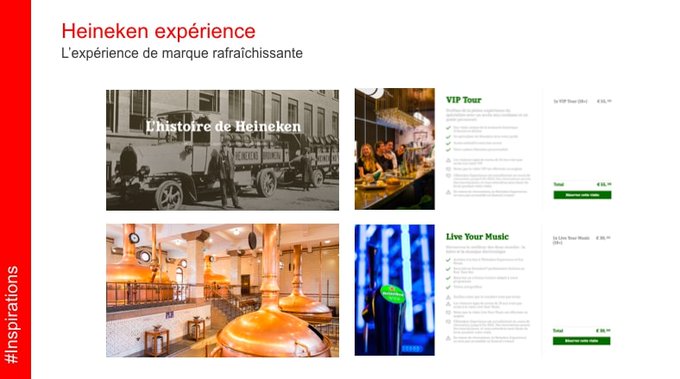
The Heineken case 🍻
Head to Amsterdam to discover the Heineken experience. The famous Dutch brewery, which has become the world's leading premium beer brand in 150 years, offers the public a guided tour of the group's oldest brewery. The program includes: a look back at the brand's heritage and history, its production methods and its innovations. And, as if that weren't enough to satisfy our curiosity, this experience gives access to a secret bar and concludes with the presentation of a personalized gift.
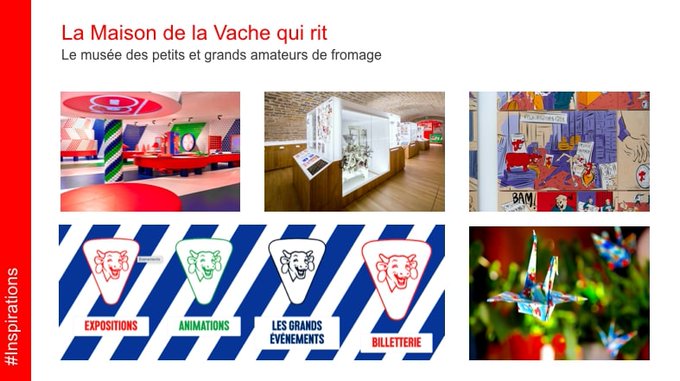
The Laughing Cow case ????
More than just a museum dedicated to this mythical cheese, the Maison de la Vache qui rit (House of the Laughing Cow) is a truly immersive place reflecting this iconic character. Visitors will find there the values of conviviality, humor and innovation of the famous red cow. This house of more than 2,200m2 is full of no less than 600 pieces and historical representations serving the heritage of this brand so symbolic in the collective memory of the French.
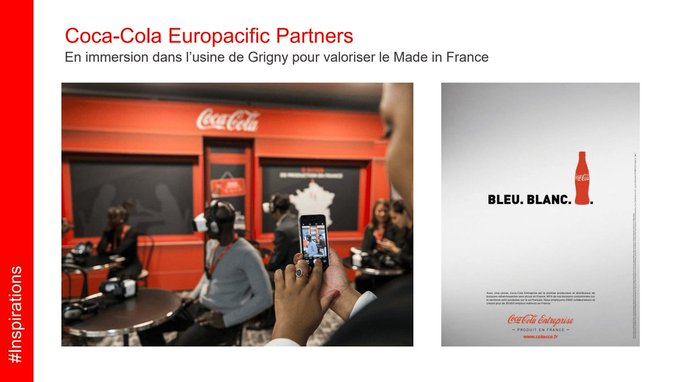
The Coca-Cola Europacific Partners case (I.e.
The European bottler of the famous soda brand is offering the public the unique experience of visiting the historic Grigny factory from anywhere in the world. This is made possible thanks to headsets... virtual reality that the brand's heritage is highlighted. This innovative immersive experience reminds us that when you drink a Coca-Cola, it's also made in France.
Best practice #2 – Brand heritage and public speaking
The Musketeers case ⚔️
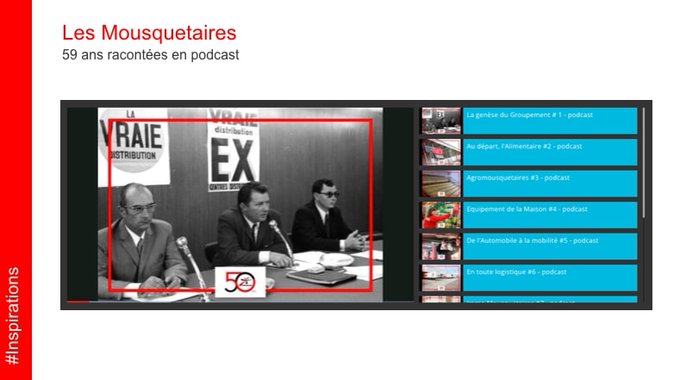
It was about fifty years ago that the Les Mousquetaires group was created, inspired by the commercial and societal developments of the 1950s, to give birth to a new vision of distribution and a whole range of new professions. This adventure, which revolutionized lifestyles, is recounted through a series of podcast. This is a narrative and engaging way to showcase a brand's heritage.
The Chanel case ????
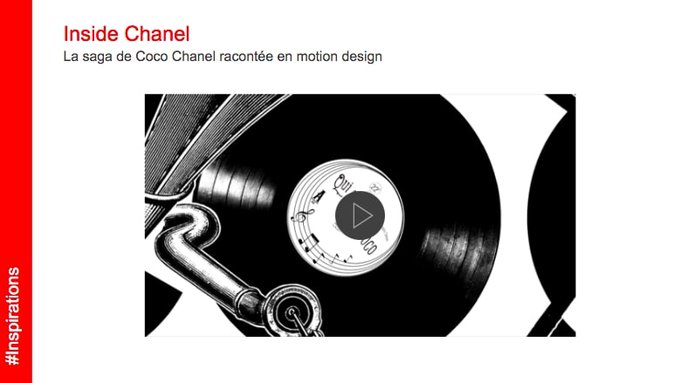
The history of this luxury brand is closely linked to the history of its founder, Coco Chanel. This legendary figure in fashion is the subject of a series of motion design documentaries.These videos chronicle her entire journey, from her humble beginnings to the spectacular rise of her brand. So, who is the woman behind this young orphan who became a legend? Find out in these videos, which have garnered nearly 2,5 million views on YouTube.
The Gucci case ????
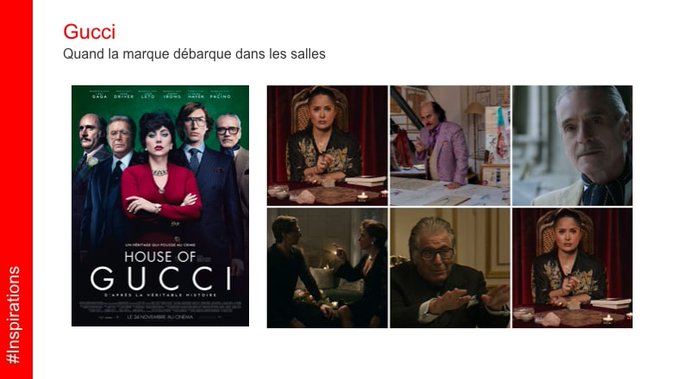
And still in the luxury sector, have you seen House of Gucci, this cinematic production by Ridley Scott, which includes some of the biggest names in Hollywood: Lady Gaga, Jared Leto, Al Pacino, Salma Hayek or Adam Driver? So, artistic production or heritage enhancement? Both! Even if the film was not unanimously praised by the family's heirs, it undeniably contributes to making the Gucci legend shine.
Best practice #3 – Brand heritage and identity objects
The RATP case (I.e.
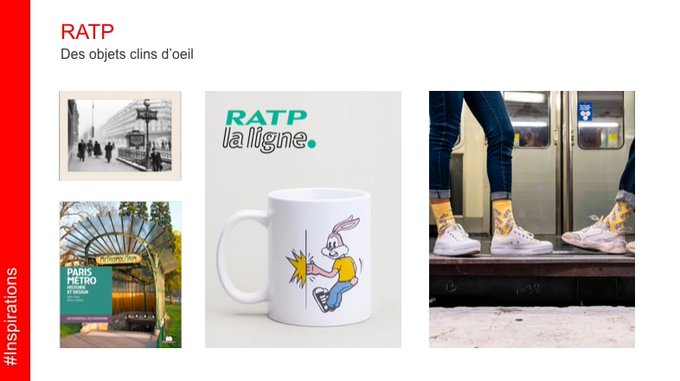
Developing branded product lines to strengthen brand identity? That's the ingenious idea that RATP had. Indeed, on the website RATPlaligneWe can acquire fashion and luggage items, everyday objects, bookstore and stationery items, or even photographs bearing the brand's image. The three collections, “iconic”, “pop” and “vintage”, showcase the historical heritage of the RATP, but also that of the city of Paris.
The SNCF case ????
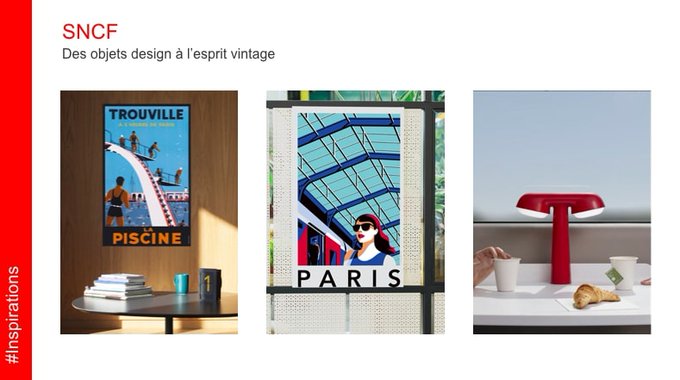
SNCF is also revisiting its emblems, stations, clocks, and rolling stock, from steam trains to the TGV, through the Grand Train SNCF brand, designed around the world of trains and travel. Through this e-commerce platform, SNCF offers a collection that showcases its architectural, pictorial, photographic, and design heritage: from posters and sweatshirts to lamps.
The Lidl case 🧢
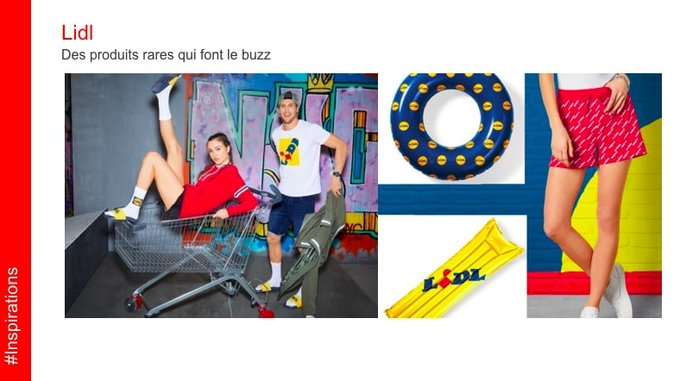
Is everything rare expensive? That's certainly what Lidl seems to be suggesting, having created a buzz with its limited-stock, exclusive products. This brand phenomenon led people to queue up to get their hands on Lidl-branded flip-flops and socks. Today, these rare and highly sought-after items are truly part of the retailer's heritage.
Best Practice #4 – Brand Heritage and Private Club
The Peugeot case 🚗
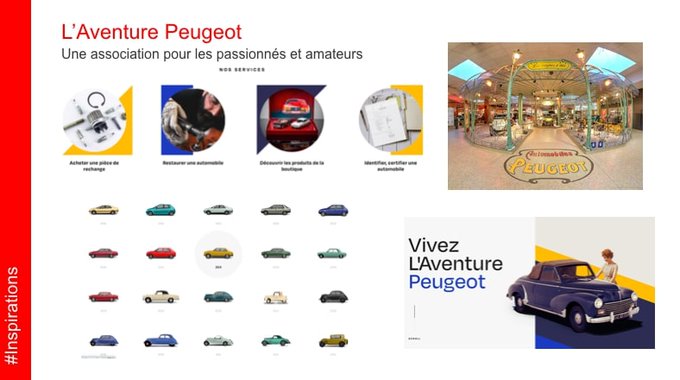
Finally, we had to address the very special case of the Peugeot adventure, whose history and success have endured since 1810. This iconic car manufacturer has taken the bold step of creating an association dedicated to passionate collectors and enthusiasts eager to learn more about the company's history. Members can identify, certify, restore, rent, or purchase a Peugeot model during this exceptional experience. In addition, they benefit from discounts on their purchases in the stores and have free access to the company's archives and museum. The underlying principle? To share unique moments with fellow enthusiasts.
🎥 Watch the full replay and tdownload the presentation slides