

Communication is plagued by many misconceptions, yet these clichés are far from the truth. 👊 That's why the mini-fair for communication professions We Are COM x ISCOM attempted to combat these stereotypes. What is the communications sector really like, and what is the daily life of communications professionals like? What are the challenges of these professions? 🤓 3 professionals answer our questions, with supporting examples.
The pros have their say!
???? Ségolène Tardy-Lehmann is a consulting professional specializing in advertising communication strategy and project management. On the other hand...agency, Eleanor Dumont is the General Manager of the Lighting Company. Finally, on the side of theadvertiser, Romain Hammard is Head of Customer Experience at Crédit Agricole Île-de-France.
Hello to all three of you, to start, what is each of your jobs?
Ségolène Tardy-Lehmann: I am a lecturer in project management, professional monitoring, and advertising communication strategy at communication schools, particularly for students at ISCOM. On a daily basis, I share my experience and expertise in writing strategic communication recommendations.This methodology is essential for the successful development of projects, since It's a well-known fact: a project never goes as planned.†
Previously, for about fifteen years, I had the opportunity to work in the media sector, at Lagardère, as well as in the advertising agency sector, at Euro RSCG (Havas Group today).
Eléonore Dumont: I represent the communication professions in agencies, since I am the Managing Director of L'Illuminarie (formerly Retail Media). We are a creative agency content all sorts, including video and motion design, which we distribute across a wide range of media: digital signage, Social Media, Web, emailing… This content requires an editorial approach, which we conduct with our clients, mainly major advertisers such as L'Oréal, Etam, Afflelou, La Fnac, etc.
Romain Hamard: On the advertiser side, I am Head of Customer Experience at Crédit Agricole Ile-de-France. Above all, I am passionate about communication. I manage the day-to-day relationships between our brand and its customers.My primary objective is customer satisfaction. Our teams are doing everything possible to personalize these relationships, particularly through the use of tools. digital and web interfaces.
Myth #1 – “Communication, advertising, marketing… it’s all the same when it comes to selling products.” True or False?
S. TL. Wrong! It's crucial to distinguish between communication, advertising, and marketing. These are fundamentally different professions. Having worked in them myself, I can attest to that. The primary purpose of communication is not to sell products, but rather to develop the image or reputation of a brand or product in order to encourage a certain behavior among the target audience. Certainly, the ultimate goal is sales, but communication does not have a direct, quantifiable impact on sales; that is the purpose of marketing, not communication or advertising. Furthermore, Some communications, such as political communication or CSR communication, do not sell anything and only deliver messages to inform, raise awareness, or encourage a certain behavior..
DE This stereotype persists! Many students still choose communication to do advertising, but that's not necessarily what awaits them. Previously, communication and advertising were the levers of marketing strategy; this is what we now call commercial communication. Today, communication is increasingly aimed at all stakeholders within a company.and not only its consumers, by activating a multitude of themes: corporate communication, internal COM, HR communication or even Financial COM.
R.H Indeed, it is very reductive to reduce this discipline to its aspect commercial. I would say that sales represent the visible part of the iceberg, and not the foundations of our professions. To sell, it's not enough to highlight a product's features, or even its price. Consumers expect much more: responsibility, commitment, fairness… So even if indirectly the COM CSR It improves sales, and sales enable investments in CSR. In other words, Communication sometimes uses techniques similar to those of commercial advertising, but its audiences and messages are fundamentally more diverse.
False, the counter-examples from the We Are COM team
Far from typical advertising, here's a communication campaign from RATP, committed to the well-being of its users with Île-de-France Mobilités, and the Biocoop customer magazine, brimming with tips and expert advice. Finally, discover the integrated report from the BIC brand.


Cliché #2 – “Communications is all glitz and champagne: we start at 10 a.m., we have back-to-back meetings and take breaks for foosball.” True or False?
R. H: Wrong! I've worked in communications for 15 years, and yet I'm really terrible at foosball. 😊 As for arriving at 10 a.m., that's extremely rare, except for special events. It is important to know that communication is a profession of availability which requires a lot of exchange, a lot of listening and a lot of support. Also, sometimes a project requires teams to stay later in the evening – for example for the organization of an event – and therefore arrive a little later the next morning.
As for meetings, there are indeed many for one very good reason: you never work alone in communications. Every communication is the result of a value chain where all areas of expertise must be coordinated. There are no superheroes in communication. : a good idea without good execution is a flop.
DE That's a common misconception, and in my opinion, it mainly concerns agency life. It's true that many agencies play on this image of foosball and sleeping in. However, the reality is quite different. When someone arrives at 10 a.m., you can be sure it's because they were swamped the day before. In an agency, we are paced by the lives of our clients; we have to adapt to them and to the cycles of their investments. For example, the October-December period is generally extremely busy for retailers.
Regarding meetings, I agree with Romain. Our professions involve creation, and it's never easy to reinvent yourself on your own. That's why, Teamwork and communication are essential. The agency also collaborates with its client, the advertiser, to ensure that the proposed idea is always the most relevant. It can sometimes be beneficial for an advertiser to benefit from the external perspective provided by the agency.
S. TL Personally, I experienced a bit of that golden age of glitz and champagne. Those were very pleasant times, and contrary to popular belief, we worked extremely hard. In communications, The celebrations are primarily organized to reward the teams for the daily commitment they have demonstrated in successfully completing a particular project.. Communication is an intense profession, where a possible nap or a game of foosball is only a breather in a very busy day.
As for meetings, they are indeed crucial. When working on a project, especially in media, collaboration and agreement are essential to ensure the project's smooth execution.
False, the counter-examples from the We Are COM team
Who better than the Communications Directors to address the daily challenges of communication?


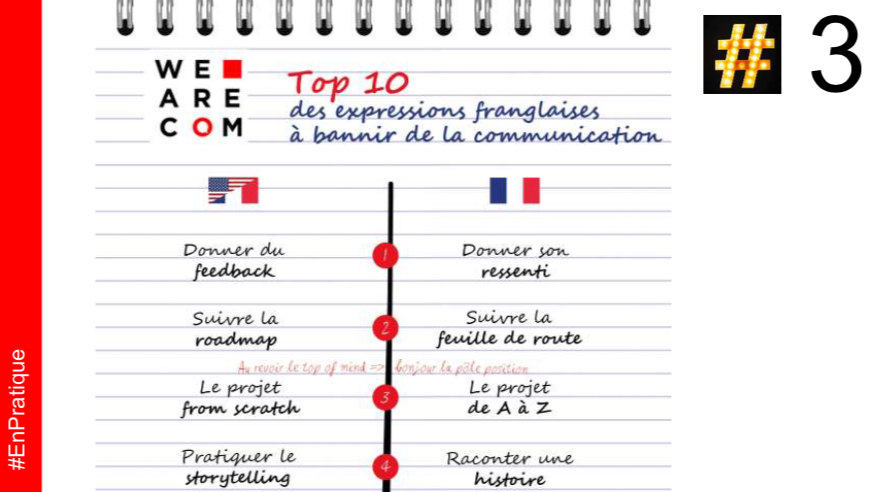
Cliché #3 – “Communication is all about graphic design, social media, trendy gadgets, and complicated Franglais.” True or False?
S. TL. Indeed, this stereotype is hard to shake. It's not uncommon for a student to tell me they know how to manage social media and master the Adobe Suite, as if that were enough. Everyone knows how to use social media, but the idea isn't simply to be a user.Above all, in communication, we seek to understand a context and grasp the issues in order to develop the most appropriate strategic recommendations. To ensure overall consistency, it is necessary to consider a large amount of data, analyze it, and measure it using KPIs.By the way, KPI stands for Key Performance Indicator. It's true that in communications, we have our own jargon. 😊 I'd say that's due to the evolution of digital technology and its often English-language terminology.
HR Our professions are constantly evolving, and new job titles are regularly introduced. I would add that our jargon also stems from the historical origins of these professions, particularly by incorporating terms related to printing. As for the graphic design aspect, I like to think that a brand identity is as complex as an individual's identity. The final product always conceals a great deal of in-depth work on the message, the iconography, the visuals, and so on. Behind every advertising poster or social media post lies a huge amount of work.
DE Indeed, visual communication and graphic design attract a great many students, focused on the final result. However, this requires serious planning beforehand. The form is important, but the content is just as crucial.
Regarding gadgets and the use of Franglais, I would say that every communicator needs to stay informed about fashion trends, the latest developments, and new technologies. Even if not everything is necessarily worth adopting, it's important to keep up to date. However, it's true that some people overuse Franglais… 😊
Finally, social media is indeed part of our daily lives, whether to promote a brand image or to promote our own image, what we call the personal branding.
False, the counter-examples from the We Are COM team
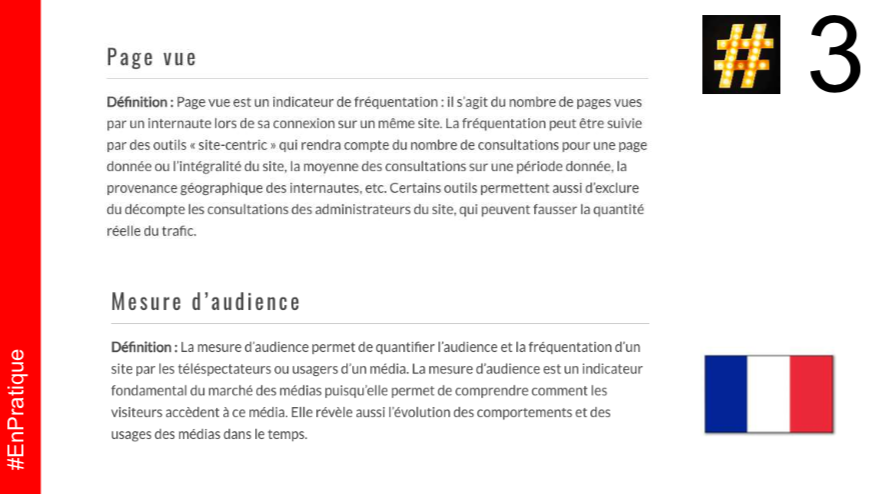
While Franglais sometimes infiltrates the vocabulary of communication, French terms for the sector do exist, such as "page en vue" or "mesure d'audience." It's up to us communicators to reintegrate them into our daily work!

Myth #4 – “Anyone can do communication without any knowledge or skills; you just need to be a smooth talker.” True or False?
S. TL: Wrong! As Eléonore said, the general public too often only sees the end result of a communication and thinks it's easy to post a message or video. However, planning for the long term requires a long-term investment. A successful message can take on meaning over a week, a month, a year, and much longer.While a one-off might work in the short term but will quickly be forgotten, it cannot be sustainable and relevant in the long term if it is not based on any thought process. The best strategy in the world would be useless if it were not based on an analysis of the values to be conveyed and an understanding of the objectives to be achieved..
ED: It is true that at first glance, Communication may seem simple because that is one of its objectives. In reality, it is a discipline that requires a great deal of knowledge, particularly in social psychology and sociology, as well as technical expertise in an ever-increasing number of tools. Communication takes time; it involves a lot of monitoring, analysis, and reflection. On a daily basis, we follow the changes in society. This constant evolution of our profession makes it as complex as it is rewarding.
HR: Yes, communication is a real profession. Interpersonal communication—the kind that occurs in our everyday interactions with each other—should not be confused with professional communication. Furthermore, Contrary to this stereotype, many communicators learn to manage silences.. In Press relations For example, in a sector where we can be in high demand, it is necessary to make choices about speaking out and choices about remaining silent; by choosing to invest only in certain media or platforms depending on its audience.
False, the counter-examples from the We Are COM team
Communication touches on a multitude of areas, judge for yourself.


Cliché #5 – “Communication cannot be measured, performance cannot be evaluated.” True or False?
HR: Of course not! In communication, everything is calculated. A company never spends money on COM, it invests: that is to say, it expects a measurable return on investment. Communication efforts are measured even more effectively in the digital age, where we can track user reactions in real time at every stage of the customer journey. Today, more and more reporting is automated, such as press coverage, which is measured using thematic keywords. Now, it has even become possible to assess the tone of this press coverage: is it positive, neutral, or negative?
S. TL. Audiences can be measured, of course. For example, with regard to the media, the hearings Certified by Médiamétrie, advertising rates can be redefined. Today, all communications professionals use KPIs. And indeed, Digital technology has democratized performance evaluations: number of impressions, click-through rate, redirection rate… making communication investments even more evaluable.
ED: Absolutely and definitively yes, communication can be measured!
False, the counter-examples from the We Are COM team
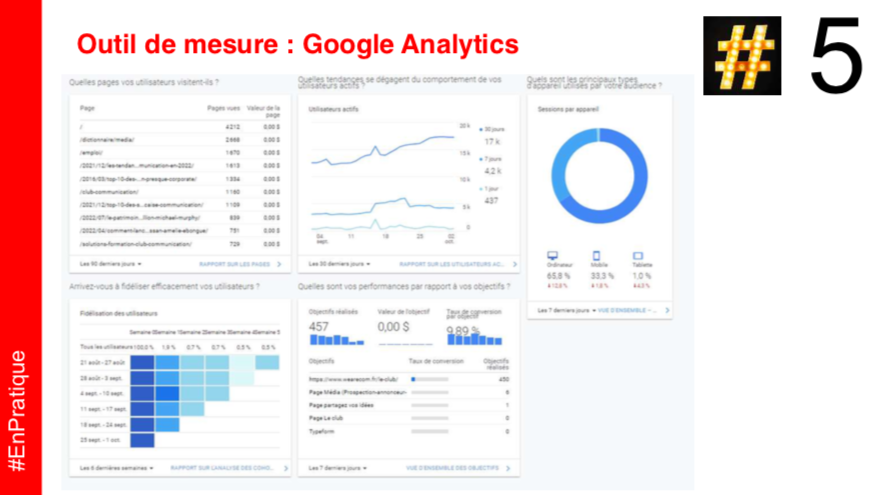
In communications, everything is measurable: engagement, reputation, business, and of course, risk management. Enter Google Analytics, a tool for measuring and analyzing website and application audiences.
Cliché #6 – “Communication is manipulation, and besides, communicators have no ethics.” True or False?
ED: Historically, communication was almost certainly linked to manipulation. In fact, there's a fascinating book on this subject. "Masters of Manipulation" written by historian David Colon. However, The key idea of communication is not to manipulate an audience, but rather to get them to support a cause by gaining their trust. Today, no company is immune to media lynching, and therefore no company would risk manipulation. In the age of fact checkingIt is unthinkable to spread false or misleading information. So yes, communicators have an ethical code, firstly in relation to their profession, and secondly because they live in their time and believe in its values.
HR: Manipulation is a term that carries a very negative connotation, certainly dating back to the ancient masters of rhetoric and other sophists. But in communication, no, we don't manipulate: no one is forced to buy one product rather than another, no one is forced to apply to one company rather than another. As Ségolène reminded us, Communication is built over the long term. Therefore, a lie would be counterproductive and would destroy all the public's trust in a company. Transparency has become essential. Finally, communicators must be ethical, especially when they decide to use their expertise for altruistic causes.
S. TL.: More specifically, if tomorrow you want to open a restaurant, you will be proud to communicate about your project and will need to inform a large number of people. Communication is not manipulation, but information for the widest possible audience.This also applies internally: if a company lies in externalShe won't be able to lie internally. She must be consistent with her values and guarantee the veracity of the information. The communicator simply delivers messages, some stronger than others, but they are still messages.
False, the counter-examples from the We Are COM team
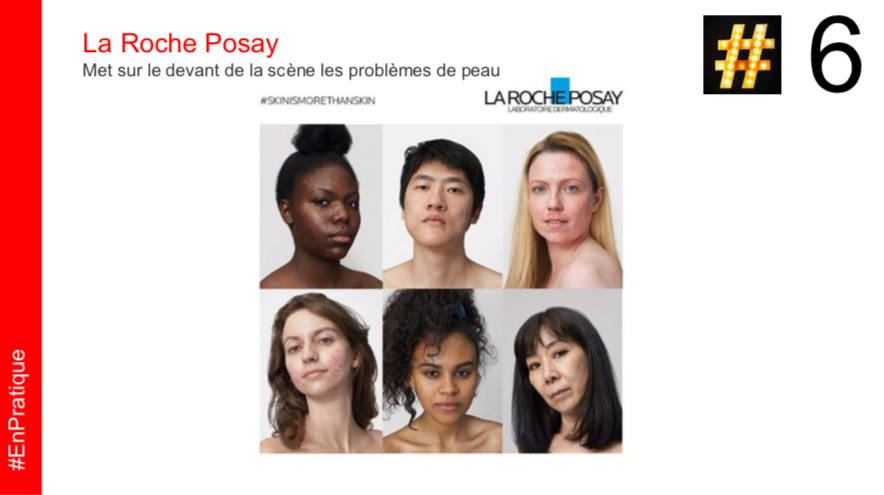
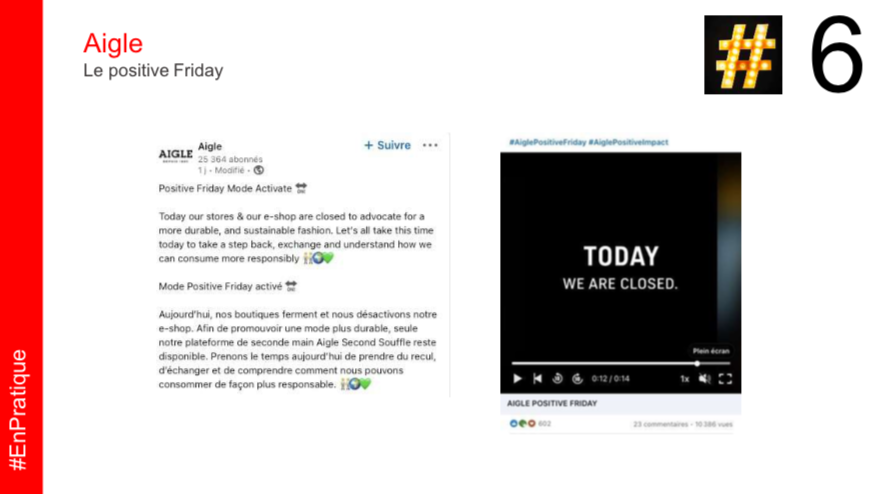
Absolutely false! Last year, for example, La Roche-Posay chose to communicate about skin problems and aimed to raise public awareness with the hashtag #skinsmorethanskin. Aigle, committed to more ethical consumption, boycotted Black Friday in favor of Positive Friday, a day dedicated to secondhand goods. Finally, Apple warns against advertising tracking.
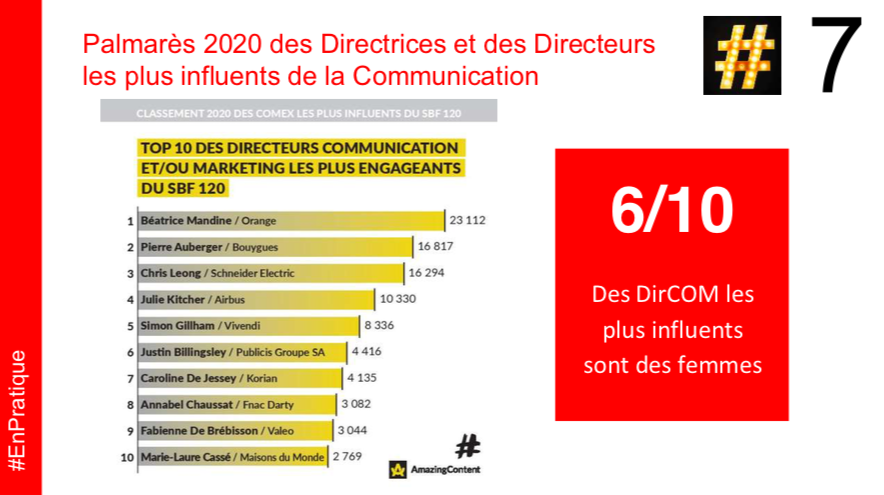
Stereotype #7 – “Communications is difficult to get into and advance in, especially for women.” True or False?
S. TL When I worked at Lagardère, our CEO was a woman. Furthermore, many female directors were promoted upon returning from maternity leave. So no, I absolutely disagree with this stereotype, even though I understand that these advancements and opportunities are not due to chance. I simply think that some environments are more conducive than others.In agencies, female communications professionals are often in the majority; this may not be the case for advertisers in the construction sector. But In communications, careers – and even very successful careers – are entirely possible for women..
DE On the contrary, I think our professions are relatively accessiblesimply because they relate to the very essence of humankindSince we cannot not communicate. On the other hand, becoming a communicator requires knowledge and skills. To succeed in this field, there's no secret: you have to work hard, have a taste for perseverance, and a desire to constantly improve.
Regarding gender parity, most of the decision-makers I have the opportunity to collaborate with are women.
R. H: Communication is above all a profession driven by passion. To become a communicator, you need to study communication and hone your skills through diverse experiences. Personally, I found it quite difficult—due to the demanding nature of the profession—to break into the world of communication, but You have to believe in yourself! If you don't believe in it, no one else will do it for you.
False, the counter-examples from the We Are COM team
Myth #8 – “Communication will end up being managed by algorithms. This profession will be replaced by artificial intelligence.” True or False?
R. H: I absolutely reject this idea. Indeed, the algorithm can only project itself into the present and the future based on constants from the past. It can therefore never truly anticipate a “new” future, but only a predictive one. Furthermore, The heart of our business is emotion, the positive emotion we want to evoke in our audiences. However, no artificial intelligence can recreate that.
S. TL Did you know that in Japan, some influencers are now creations of artificial intelligence? AI is becoming increasingly powerful, so much so that one might wonder what the future holds for these professions.influence in 10 years. Regarding communication specifically, I think it's primarily the metaverse that will impact our professions in the coming years.We will need to make new spaces for communication coexist.
DE It's true that we never cease to be amazed by the feats that machines can achieve, and that's a real advantage we have today from a technical point of view. But Even if new technologies are able to offer us productivity gains, they can never guarantee gains in creativity. This could lead to productions that are not very distinctive, tasteless and devoid of emotion.
In other words, I am convinced that technology will allow us to go further in innovation, provided that human creativity always remains behind it..
False, the counter-examples from the We Are COM team
And to dispel this last cliché, let's take a closer look at the role of humans in communication. Burger King humorously engages an internet user in the street, Amazon highlights the dubbing of films and series with the “Dubbing Experience,” and Travis Scott performs a concert on Fortnite.


Ségolène Tardy-Lehmann,
Consultant in advertising communication strategy & project management