For several years, I have been emphasizing the lack of objective criteria for evaluating brand names. Once marginal, the name has now become a central vector of the strategy brand name and communication especially when you know how to exploit its leverage.
Why recognize a bad brand name?
Responding beyond the usual "I like / I don't like" allows us, by contrast, to identify the profile of good, even excellent or exceptional, brand names.
How to recognize a bad brand name?
Here, in order of importance, are the different criteria that identify them.
#1 – He forgets himself
It leaves no trace and nothing helps it to be remembered. It is swept away in the deluge of daily information to which we are subjected. According to various studies, we went from an exhibition of 1500 advertising messages / day in 1970, to 10,000 today! Standing out in this context is a challenge, and one of the major missions of a brand name is to contribute to this. Some succeed, others don't. For example, I've been searching in vain for the name Google launched two years ago for one of its subsidiaries—a rather barbaric name with more pharmaceutical than digital connotations.
#2 – The INPI rejects his application for registration!
The legal aspect is also essential. The INPI (French National Institute of Industrial Property) is becoming increasingly strict regarding the descriptiveness of names. Increasingly, names are being rejected due to their lack of distinctiveness. This forces the project back to square one, with significant consequences in terms of timing and budget.
#3 – It infringes the rights of a similar prior trademark which is opposing it
If the INPI deems it admissible, you will also have to start from scratch. Investing more time in creating an original name would have eliminated this risk of opposition.
#4 – Once registered, your trademark will not be able to oppose future similar trademarks launched by future competitors.
If it lacks originality, from a legal standpoint, it is considered a weak trademark.This was the case with "Ventes Privées" (before it changed), the name had inspired a family of followers such as: "Private Showroom", "Unique Sales", "Private Chauffeur", against which the brand could not react due to its overly descriptive nature.
Some brands therefore end up changing their name to build more differentiated territories: "Chauffeurs Privés" becomes "Kapten" then "Free Now", "les Nouveaux Fermiers" rename themselves "Happyvore", "GDF-Suez" has created the more glamorous identity of "Engie".
#5 – It uses a descriptive root that links it to a sector like all its competitors
Its identity will be close to generic values, which does not facilitate communication. For example:
- – “Intersport, Go sport, Sport 2000” but “Decathlon” stands out.
- – “Paypal, Paylib, Hipay, Payzen” but “Lydia” is moving away from them.
- – “BforBank, Hello Bank, MonaBank” and not “Shine, N26, Revolut, Fortuneo” which show more uniqueness.
Once more creative and daring, perfume brands are now taking the easy way out when naming their new products.endlessly repeating the same theme or almost. "For her, For him, Man, Man's Night, Girl"...nothing to do with bold bets on names with meteoric success like "The Little Black Dress" or "One Million".
#6 – It is explicitly linked to an activity, which could prove to be a handicap later on in the event of growth in new markets
Although it has become a cult and generational brand, "Le Slip Français" falls into this category. A more universally appealing name would, however, avoid this drawback. To signify the French manufacturing of its jeans and avoid the pitfall of a literal expression, "1083 - Made less than 1083 km from your home" uses the metaphor brilliantly and can serenely consider its subsequent deployments.
#7 – It is 100% generic.
We are witnessing this trend, championed by certain niche brands which thus display their anti-marketing bias in the spirit of "no logo. »These brands will be doomed to remain the preserve of a niche audience, since their names will be undetectable by search engines. Like the niche brand "Vetements" (Clothing), which made this choice. I much prefer names like "Maison Standard," "Panoplie," "Commune de Paris," "Cuisse de Grenouille," and "Sœurs" (Sisters), which create strong and unique identities.
#8 – The wrong name is unpronounceable, without musicality or meaning, and it adds no imagination:
Their frequency is increasing dangerously: “Sarenza”, “Zalendo” why not “Sarenda” or “Zalenzo” or “Kelepron”, “Setrossia”?
Let's prepare for the worst with the combinatorial power ofIA and we can expect a flood of sanitized, cheap, interchangeable neologisms, devoid of phonetic, semantic or graphic quality.
When consulted, Chat GPT provides these self-service suggestions: “Vimplix”, “Snorblix”, “Snilk”, “Flibber” which foreshadow this trend towards the Ikeatization of naming.
The more these pseudonyms proliferate, the more names like "Loversdose" (for its double meaning), "Welcome to the Jungle" (for its imagery), "Deezer" (for its musicality), "Lulu dans ma rue" (for its complicity and cheekiness), "Tesla" or "Vinci" (for their symbolic power) will be appreciated; these names will become exceptional in contrast to an increasingly sanitized and downward-looking brand environment.
#9 – It's "trendy"...
Although the saying reminds us that "fashion fades," it is difficult to resist the temptation to follow the spirit of the times. Unless there's a clever twist, the "trendy" name will quickly become outdated.
How many brands have been built on the model of Cartier's "So pretty", then on that of Agnès B, or finally on that of "Michel et Augustin" which inspired hundreds of clones.
For several years now the root “ee” has been (but for how much longer?) a sign of modernity for many brands that are created such as “Acheel” and of course the brand “Veepee” which is the extreme illustration of this.
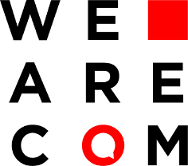
The same applies to the root "We" and its multiple variations such as: "WeareBrewers, Weareinnovation, Wearekids, WeareParis, and of course Wework". These brands with strong community connotations are flourishing everywhere, probably in response to growing consumer expectations for proximity and sharing. These brands will have to keep their community promise, otherwise they will appear artificial and risk disappearing.
Warning, The spirit of the times is ruthless. These brands built on "we", "ee" will become outdated as they multiply.
#10 – Conversely, it is esoteric
Some names are too heavily influenced by company culture, designed internally for internal use. Lancia offers an extreme example of this with its latest concept car, "Pu-RaHPE". This highly technical approach doesn't really send any promises or messages to the public. Unlike concept car names like "Exalt or Inception" which I worked on with Peugeot to embody brand values.
#11 – He tries to express a message that is too complex, leading to a dead end
By trying to make the name say too much, it will ultimately lose all power to engage and attract. In this respect, a name like "Ma French Bank"* really gives the impression of trying at all costs to reconcile the start-up aesthetic with that of institutional citizenship. These Since two opposite directions cancel each other out, it would have been preferable to express them successively. The name "Happyvore," despite the commercial success of the products, also aims to reconcile two conflicting promises. In my opinion, this comes at the expense of the word's euphony and its appealing, indulgent connotations.
The name is the driving force, not the message, which is intended to be deployed in the accompanying communication. A name can't say everything; that's not its purpose. Naming is about establishing a hierarchy! And making a crucial decision during the final selection.
*La Poste has just announced that Ma French Bank will not continue its operations.
#12 – Be careful, some names are less “bad” than they first appear.
In a highly mimetic context, breaking free from the spirit of the times exposes one, at least initially, to criticism, or even rejection. You have to persevere, telling yourself that all the names will eventually become established.
The name "Inouï", despite the initial fierce criticism, is now well accepted by the market.
Many names without a 'wow' factor can do the job once established and become strong brands. "Le Bon Coin," "Crème de la Crème," and more recently the IT freelance platform "Le Hibou" appeal with their vintage and timeless connotations, even though they run counter to modern stereotypes.
Another example: "66°30" created by MàLT for a brand of organic men's cosmetics. This number is only significant to a handful of astrophysicists, however, it's a fantastic teaser for storytelling, namely "the angle of inclination of the Earth relative to its orbit around the sun," this territory is unique and sustainable.
While the quality of the name is crucial for its leverage effect at the launch of the new brand, let us not forget that names are also judged over time. An unusual paradox that brand creators are used to facing.
#13 – It will be buried in 3 pages of search engine results.
The outlook for the project is not very favorable, unless substantial budgets are committed to its digital visibility. By creating a tailor-made and truly exclusive neologism, it is common to have no prior trademark or commercial presence on search engines. This is a huge advantage for building communication.
#14 – It lacks lineage and resonance with its parent brand
The recent launch of Jean-Paul Gaultier's "Divine" perfectly illustrates the gap between a somewhat clichéd product name and the more unconventional brand identity of the former enfant terrible of fashion. Furthermore, "Divine" has just faced competition from an existing, identical brand. A creative and innovative concept, in line with the brand's boldness, would obviously have avoided encountering such an obstacle.
Conversely, the expression "J'adore," very common in the 90s, becomes less commonplace once associated with Dior ("Dior J'adore") and then sounds like a pure phonetic mantra. Similarly, Loverdose draws on the DNA of the Diesel brand and reinforces it, just as "Allure" does for Chanel.
#15 – After a name change, the old name always remains attached to the new name
If the duplication persists after a year, I would have doubts. on the relevance of the change and/or on the choice of the new name. Thinking of X-ex Twitter? You've got it!
*La Poste has just announced that Ma French Bank will not continue its operations.
 Jacques Seidman,
Founder of the agency MàLT – Long-Term Brands and a leading expert in naming