Creating an event with influencers isn't just about a flashy stunt or an exorbitant budget. HeinzInfluence is primarily conceived as a brand expression territory, capable of fostering dialogue between popular culture, creativity and strategy 🍅
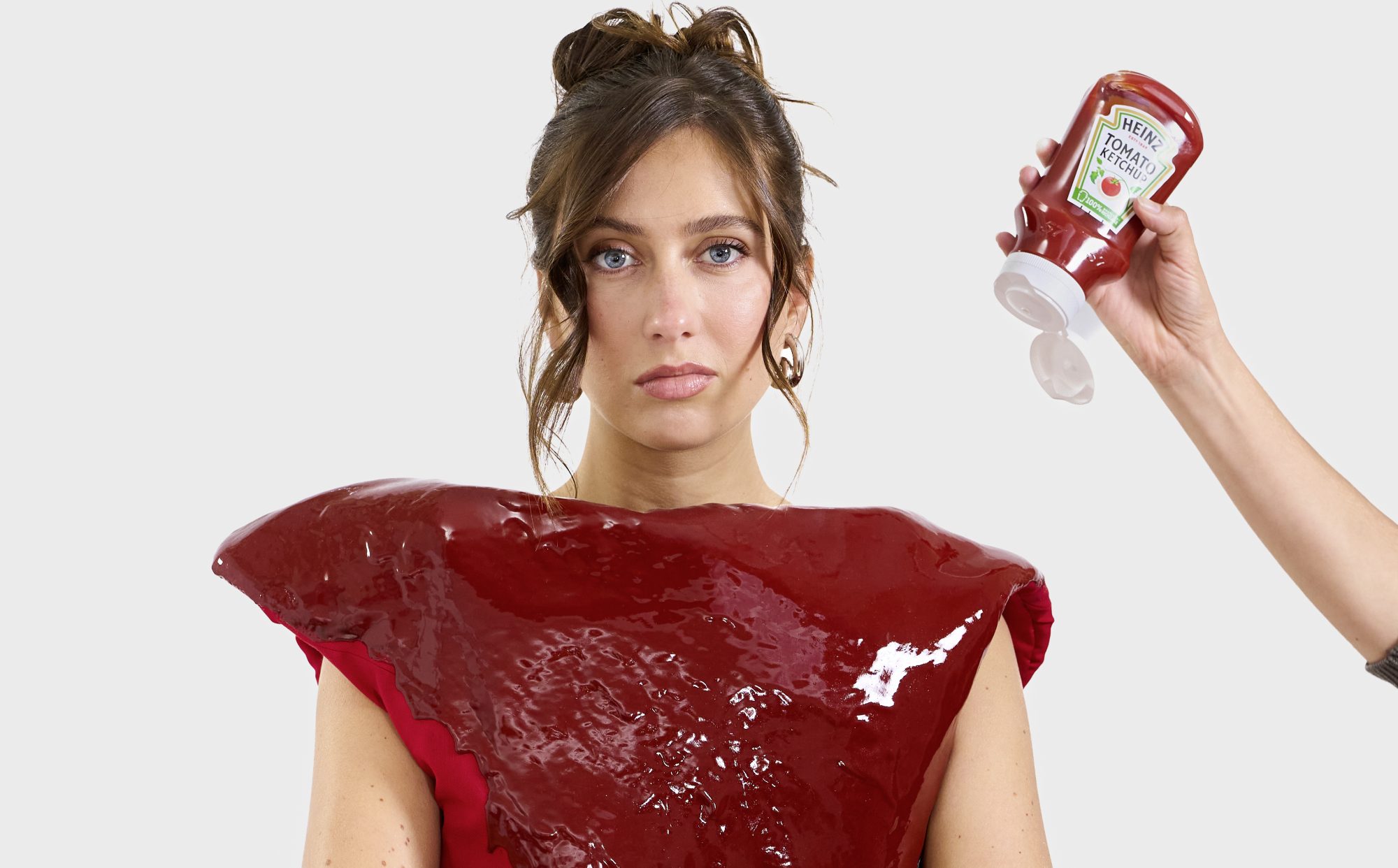
By showing up at Fashion Week with a Haute Couture dress inspired by its iconic ketchup, the brand wasn't just looking for buzz. It was building an influence operation consistent with its DNA, Designed to spark conversation, engagement… and the desire to share. Behind this spectacular activation lies, in reality, a subtle work on codes, relays, and storytelling.
 👉 Besma Baghdadli, Marketing Director at Kraft Heinz, looks back at the behind-the-scenes aspects of this operation: the strategic choices, the creative biases, and the lessons to be learned for communicators looking to do Influence is a true brand lever, beyond a simple "hit" 🚀
First of all, why invite oneself to Fashion Week?
Besma Baghdadli: Heinz is an iconic brand in our kitchens! Our primary goal was to go further, to go beyond the walls of this kitchen, to make our product a true object of desire, while reaffirming our brand DNA.
Fashion Week seemed to us like an opportune moment: a major cultural and media event, an entire week dedicated to appearance and iconicity !
More concretely, 3 major reasons motivated us to "hack" Fashion Week:
* Taste and cultural relevance: This fashion event is an ideal opportunity to talk about your brand differently, by partnering with content creators from other worlds than food and agribusiness.
* Connecting with consumers: It is also an opportunity to play on an emotional level, more than on a nutritional level, an opportunity to dare and unleash our creativity.
* Media coverage: Finally, Fashion Week is an exceptional media opportunity. It allows us to spark curiosity, intrigue, and generate buzz around our brand in a highly impactful way.
So, how do you "hack" Fashion Week?
Perhaps the most important thing is to partner with the right people, to sign the most relevant agreements. To create a real buzz in the press and media, we chose to work with Lora Sonney, a designer known for her artistic repurposing of everyday objects, as well as to Styleto, an influencer passionate about the Heinz brand (who even went so far as to get one of our ketchup bottles tattooed on her ankle)!
Our action plan was structured as follows: 3 major beats :
* The design: We asked Lora Sonney to create a costume replicating the effects of our flagship product, ketchup, for Fashion Week. Lora really embraced the challenge, experimenting with all sorts of techniques to achieve a result that closely matched the color, texture, and density of the iconic sauce.
See this post on Instagram
* The Incarnation: Who would wear this dress? The choice naturally fell on Styleto, an influencer already won over by our brand. At Heinz, we firmly believe that a successful collaboration is an instinctive one, based on authenticity.
* The revelation: The reveal is a key moment! This reveal took the form of an exclusive photoshoot, broadcast live on TikTok and other social media platforms. It's a highly distinctive way to communicate, far removed from the traditional commercial approach; we chose to capitalize on authenticity.
See this post on Instagram
How can such an activation be sustained over time?
Of course, getting invited to Fashion Week is not something you can just do on a whim. This is prepared with teasing and continues to be experienced after the reveal.
Upstream, we communicated about this project throughout its entire development, from its genesis (the design of the dress) to its finalization on the big day. This teaser film, produced by our in-house studio and launched organically on social media, generated super positive results!
After Fashion Week, videos recapping the reveal were released to keep the event alive over time.
In addition to digital content, we also organized a closing event for this campaign. Similar to the after-shows at Fashion Week, we invited media, influencers, partners, and clients to a small gathering. It was a way to allow these stakeholders to experience this impactful activation in real time.
This evening, conceived and branded by Heinz, from the decorations to the goodies, enjoyed great reach and benefited from numerous media coverages. In numbers, the Red Party represents more than 950.000 pieces of content generated!
And finally, still on the numbers front, this Heinz activation during Paris Fashion Week reached over 11 million people on social media. Beyond this social media aspect, the national and international media coverage was also significant, with more than 4,5 million reach.
What lessons have you learned from this unusual PR operation?
Precisely, thatIt's important to dare! Of course, not all brand DNA allows for such a dose of audacity; it depends on their foundations. Authenticity is necessary to do it.
Anyway, It remains very interesting to connect with other worlds, to see what is being done elsewhere, outside of one's comfort zone.
Here are 5 ingredients For successful influence activation:
- Marketing objectives : you don't use influence for the sake of influencing. Before starting, you need to know why you're doing it and how you're going to handle the project.
- The aim of the brand What do you want the media to say about your brand? Question this perception.
- The audience The more you know your audience, the more relevant your content will be. Study them to best adapt your content to their information consumption habits.
- The platform Each social media platform serves a specific purpose. For talking about food, choose Instagram or Pinterest; for creating a buzz, nothing beats TikTok, and so on. The choice of channels is fundamental.
- The creative idea Your creative idea must challenge (in a positive way) your audiences. Otherwise, your activation risks going unnoticed.
Finally, your influence efforts must be measured! Many measurable key performance indicators (KPIs) exist today:
- Reach and notoriety: Impressions & reach of influencer content (organic + paid), share of voice (volumes and mentions, hashtag usage).
- Commitment & Feeling: Comments, shares, sentiment analysis.
- Brand-related metrics (not always possible and heavily dependent on paid media support): memorization, evolution of brand preference.
- Conversion (not always directly attributable): increased sales, product trials.
- For role-playing/events: the attendance rate, the content generated during the event, the media value “earned”.
And what about Pinterest in all of this?
For Besma, Pinterest stands out due to its unique user/consumer behavior, making it a particularly interesting media platform. Users actively seek information and inspiration, scrolling approximately three times slower than on other social media platforms. This sustained attention creates an ideal context for brands: on Pinterest, it's not simply about displaying a message, but about telling a relevant story at the right time. Unlike other social media platforms, where targeting is primarily based on age, gender, or interests, Pinterest allows targeting by searched keywords (sponsored search), offering much stronger contextual relevance, directly aligned with consumer intent. This approach strengthens the impact on consideration, purchase intent, and top-of-mind awareness. Users come to Pinterest to envision their future uses and can quickly move from inspiration to action, especially in categories like food. For Kraft Heinz, recipes and culinary inspiration make Pinterest a natural platform for engaging with key consumption moments and being present from the very beginning of the shopping list process. From a behavioral perspective, Pinterest reflects what consumers will do tomorrow: being present today means being part of their future.🎥 The replay of the meet-up and its support